Quick answer
Storm damaged AC repair in Miamisburg, OH starts with a safe inspection before the unit is restarted. Comfort Air Solutions tests the coil, compressor and control boards after hail, lightning, wind or flooding, photographs everything for your insurer, and gives you written repair or replacement options, with 24/7 emergency service when the storm leaves you without cooling or heat.
Southwest Ohio gets its share of severe weather: spring hail, summer thunderstorms with lightning and straight-line winds, and heavy rain that pushes the Great Miami River and its creeks over their banks. Heating and cooling equipment sits right in the path of all of it.
Comfort Air Solutions inspects and repairs storm-damaged furnaces, air conditioners and heat pumps throughout Miamisburg, West Carrollton and the Dayton area. We tell you what is safe to run, what needs repair, and what needs replacing, and we give you the documentation an insurance adjuster will ask for.
Signs Your HVAC System Was Damaged in a Storm
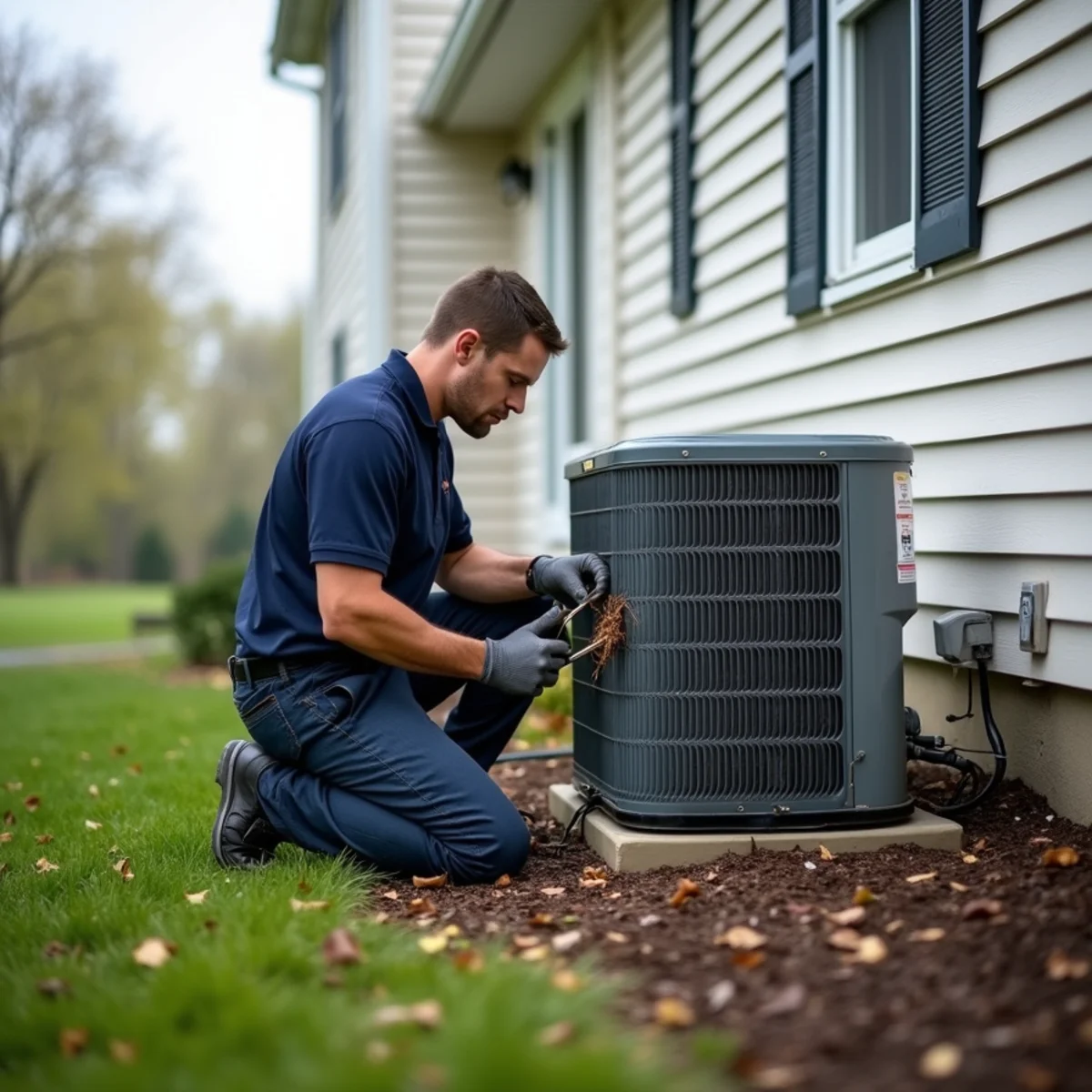
Flattened or bent condenser fins
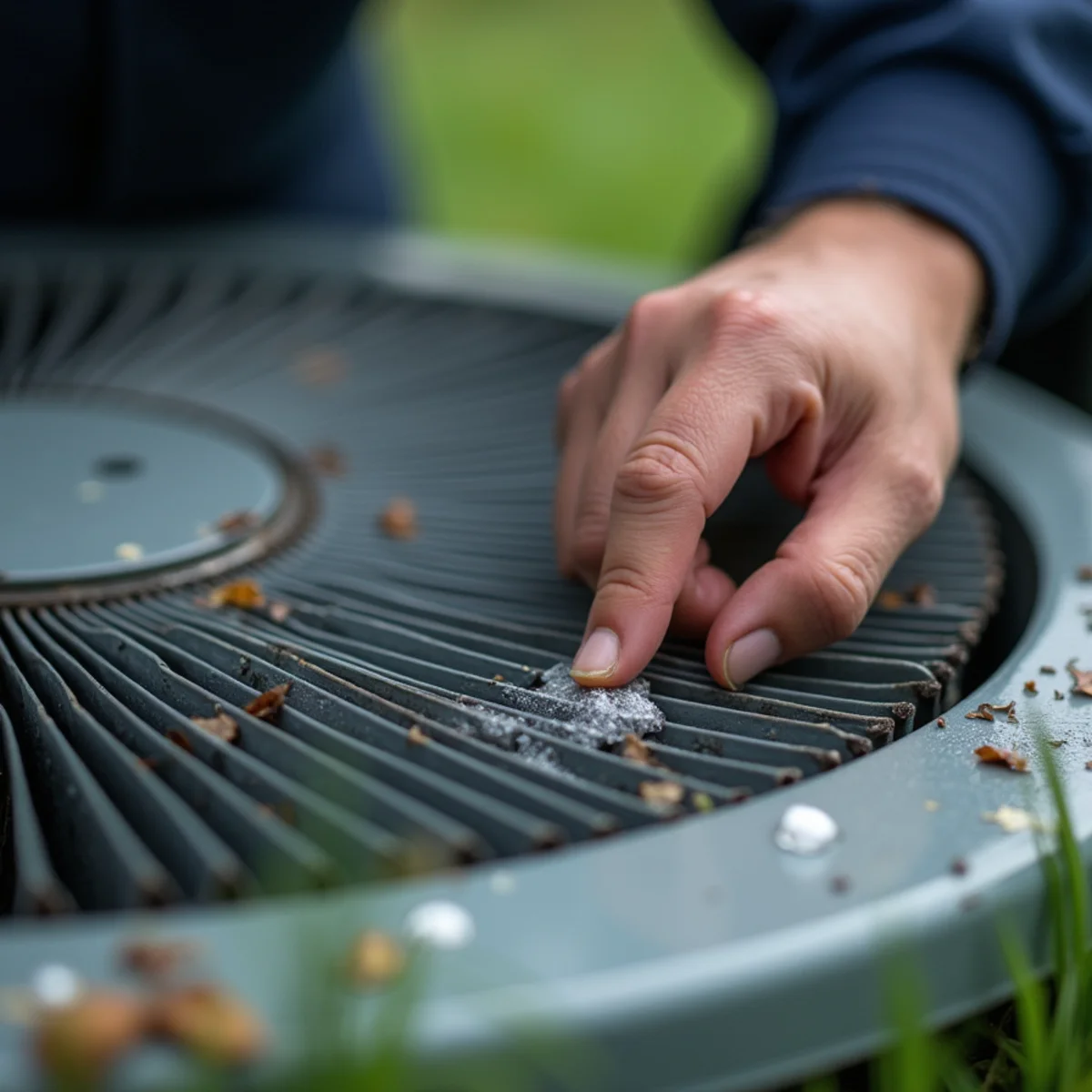
Hail crushes the thin aluminum fins on the outdoor coil, choking airflow and forcing the compressor to run hotter.
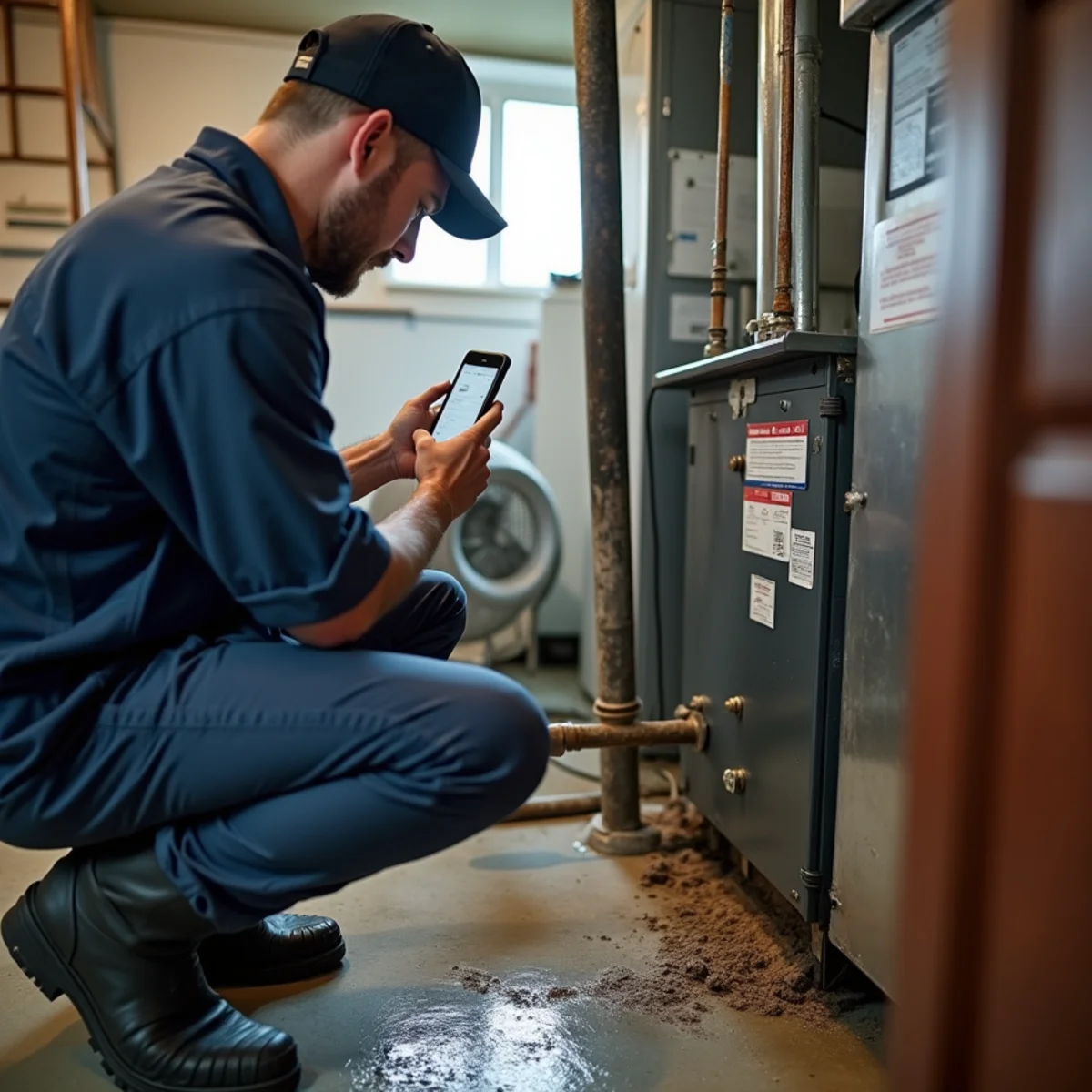
Water lines on the furnace or water heater
A basement that took on water can leave a visible line on the cabinet. Gas valves, control boards and burners that were submerged are not safe to restart.
Nothing happens after the power comes back
Lightning and utility surges frequently kill control boards, transformers, capacitors and thermostat circuits even when the house otherwise seems fine.
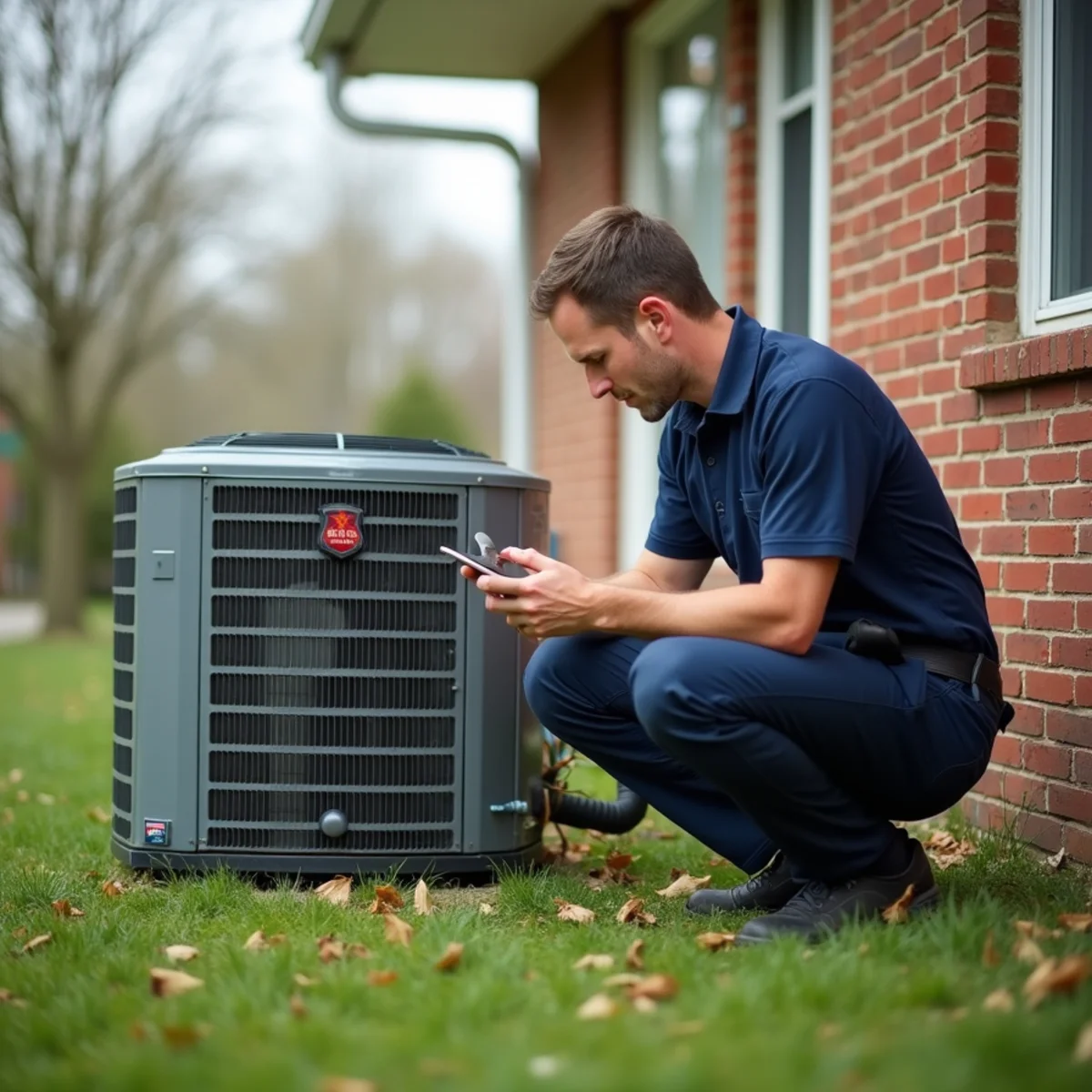
A humming or buzzing outdoor unit that will not start
Surge-damaged capacitors and contactors often leave the compressor humming without running, which can overheat it if left alone.
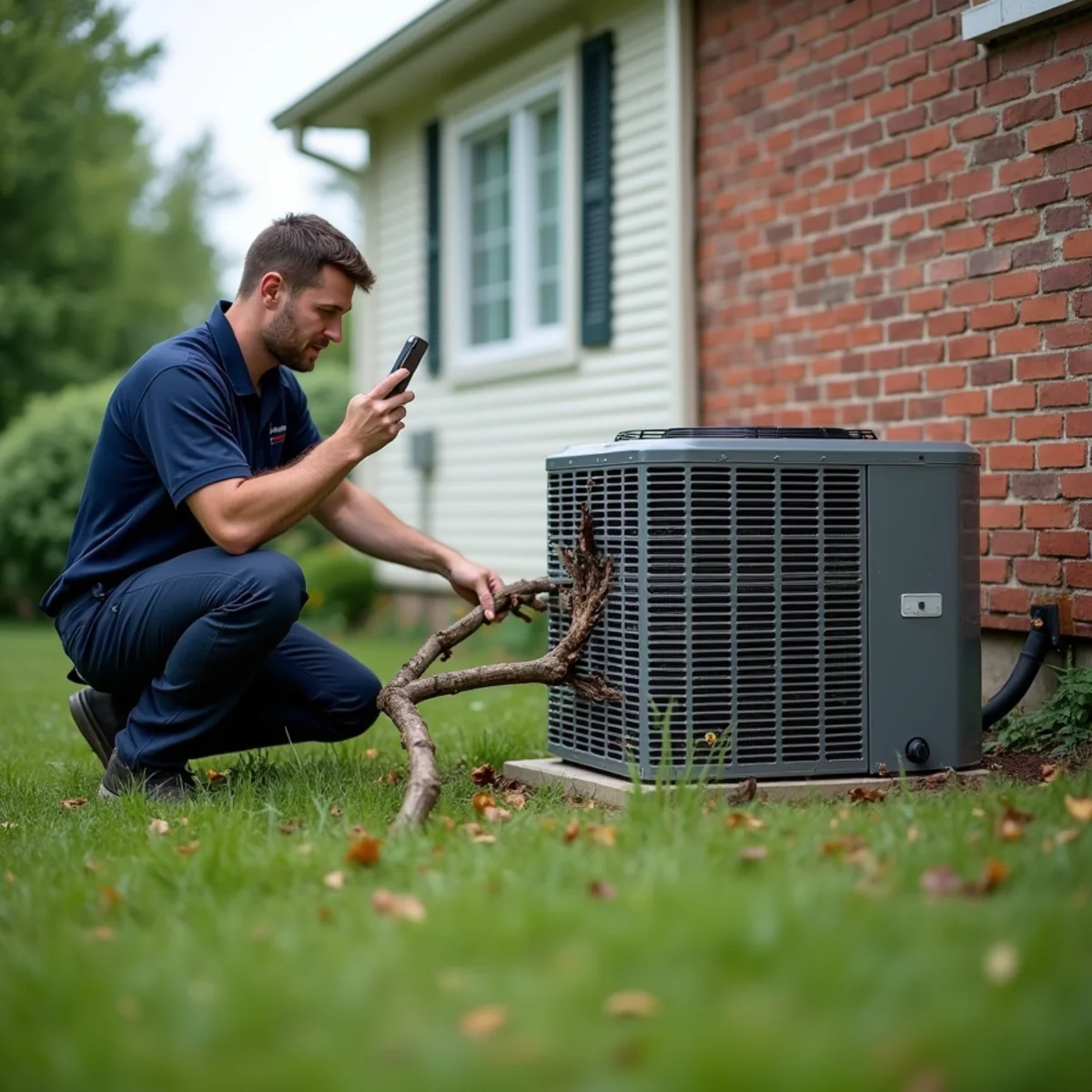
A limb or debris lying on or in the condenser
Falling branches dent cabinets, bend fan blades and can crack refrigerant lines, causing a slow or sudden refrigerant leak.
The unit shifted off its pad
Floodwater and high winds can move condensers, stretching line sets and electrical whips until they kink or pull loose.
Seeing one of these signs?
Call now — we dispatch fast and give you written options before any work.
What a storm damage inspection includes
Each item is written up so the same report works for you and for your adjuster.
Dated photos of the damage as found
Model and serial plates, hail marks, water lines, debris and the surrounding yard, captured before anything is moved or cleaned.
Coil and fin assessment
How much of the condenser face is flattened, whether any tubes are dented, and the airflow and temperature split that result.
Surge damage testing
Control boards, transformers, capacitors, contactors, thermostat wiring and compressor windings checked with a meter, not guessed at.
Refrigerant leak check
Pressures read and suspect joints tested around impact points and stretched line sets, with the refrigerant type noted.
Flood exposure review on furnaces and air handlers
Gas valve, burners, blower motor, board and ductwork inspected for water contact, with anything unsafe tagged out of service.
Cause-of-loss report and written estimate
A plain description of what caused each problem, what must be replaced, what can be repaired, and the price for both routes.
How We Handle Storm Damage Calls
- 1
Safe shutdown guidance by phone
When you call, we help you confirm the breaker and gas are off to affected equipment and explain what not to touch until we arrive.
- 2
Photo documentation before any work
The technician photographs the equipment, model and serial plates, water lines, hail impacts and debris before anything is moved, so your claim reflects the damage as found.
- 3
Electrical and refrigerant testing
We test control boards, transformers, capacitors, contactors and compressor windings, and check refrigerant pressures for leaks caused by impact or vibration.
- 4
Repair or replace recommendation
Flood-soaked gas controls and control boards are replaced, not dried out. Hail-bent fins can sometimes be combed straight; severe coil damage may call for a new coil or condenser.
- 5
Written report for your insurer
You receive a written description of the cause, the damaged components and our repair or replacement estimate to submit with your homeowners claim.
What Affects the Cost of Storm Damage Repairs
Insurance coverage varies by policy and deductible. On our side, these factors determine the scope of work.
- Type of damage
- Cosmetic hail dents differ greatly from coil damage that reduces capacity, and surge damage to a single board differs from a failed compressor.
- Flood exposure
- Equipment that sat in water usually needs gas valves, controls, blower motors and sometimes the entire furnace replaced for safety.
- Equipment age and parts availability
- Older systems on R-22 or with discontinued boards may make replacement more practical than repair.
- Refrigerant leaks
- A punctured line or coil requires leak repair, evacuation and a new refrigerant charge in addition to the part itself.
- Protective upgrades
- Adding surge protection, raising a condenser on a stand or installing hail guards adds to the job but reduces risk next season.
Why You Should Not Restart a Flooded Furnace
A gas valve that has been under water can stick or corrode internally, and a submerged control board may short unpredictably. Industry guidance and manufacturers agree: flood-soaked gas controls must be replaced, not dried and reused. Running a compromised furnace risks fire, gas leaks and carbon monoxide problems.
If floodwater reached the ducts, they can hold silt and mold spores. After repairs, our air duct cleaning service can remove that debris before the blower spreads it through the house.
Documenting HVAC Damage for Your Insurance Claim
- Take your own photos and video of the equipment and surrounding area as soon as it is safe
- Note the date and time of the storm and when the system stopped working
- Keep damaged parts we remove until your adjuster says they are no longer needed
- Ask us for a written report naming the cause of loss: hail, flood, wind, falling tree or power surge
- Check your policy for surge, flood and equipment-breakdown coverage, which are often handled differently
Protecting Your System from the Next Storm
A dedicated HVAC surge protector installed at the outdoor disconnect helps shield compressors and control boards from lightning-related spikes and the surges that happen when utility power is restored. A whole-home surge protector at the main panel adds another layer.
Keeping limbs trimmed back from the condenser, raising units in flood-prone yards and keeping the system on a seasonal maintenance schedule also help. If your AC is simply out after a storm with no visible damage, our emergency AC repair crews can usually diagnose it quickly.
After the Storm: Finding the HVAC Damage You Cannot See
Plenty of storm-hit systems start right back up the next morning, and that is exactly why damage gets missed. A weakened capacitor, a coil half-blocked by hail or a hairline leak from a jolted line set lets the unit limp along until the first real heat wave. This guide breaks down what each kind of storm does to equipment, how to bring a system back online safely, and which problems tend to appear weeks later.
What each type of storm does to your equipment
| Storm event | Parts most at risk | How we check it | Common outcome |
|---|---|---|---|
| Hail | Condenser coil fins, coil tubes, fan blade, top grille | Percent of coil face blocked, head pressure, temperature split | Fin combing for light damage; coil or condenser replacement when tubes are hit |
| Lightning or utility surge | Control boards, transformers, capacitors, contactors, thermostat, compressor windings | Voltage and continuity tests, capacitor microfarads against the rating, winding resistance | Board or electrical part replacement; compressor tested before any verdict |
| Flooding | Gas valve, burners, inducer, blower motor, control board, duct insulation | Water line on the cabinet, corrosion inside controls, duct condition | Submerged gas controls replaced; often the whole furnace or air handler |
| Wind and falling limbs | Cabinet, fan motor and blade, line set, electrical whip, pad level | Refrigerant pressures, leak search at bends, fan balance | Straighten or replace panels, repair lines, re-level the pad |
| Long outage, then restoration | Compressor start components, thermostat memory, condensate pump | Start sequence, amp draw at startup, pump operation | Often a capacitor or contactor; sometimes only a reset |
A safe restart sequence after the power returns
- During the outage, set the thermostat to off and, if it is easy to reach, switch off the breakers for the furnace and outdoor unit.
- Once utility power is back, give the grid time to settle before you restore the HVAC breakers; flickering power right after restoration is when many surges hit.
- Walk outside and look at the condenser: no limbs, no standing water around it, no bent fan blade, and the unit still sitting level on its pad.
- Turn the breakers on, then call for cooling or heat at the thermostat. Many thermostats and control boards build in a delay of several minutes before the compressor starts, so a short wait is normal.
- Listen at the outdoor unit. Humming without the fan spinning, clicking over and over or a burning smell means shut it back off at the breaker and call us.
Our blog post on whether an AC is safe to run after a storm has a printable version of these checks for your utility room door.
Delayed damage that shows up weeks later
- A swollen or weak capacitor. A surge can shorten its life without killing it outright; it reads low on a meter and fails on the next hot afternoon.
- Pitted contactor points. Arcing during a surge roughens the contacts, which later chatter, overheat or weld shut.
- Partial coil blockage. Hail damage covering part of the coil raises head pressure and electricity use without an obvious breakdown.
- A slow refrigerant leak. Vibration from a limb strike or a unit knocked off its pad can crack a joint that loses charge gradually over the season.
- Wet duct insulation after flooding. Crawlspace and basement ducts wrapped in soaked insulation stay damp, and that moisture can feed mold long after the water recedes.
Generators, backup power and your HVAC
Portable generators keep a furnace blower or a refrigerator running during long Miami Valley outages, but they need to be handled carefully. A furnace should be powered through a transfer switch or interlock installed by an electrician, never by backfeeding a dryer outlet. Central air usually needs far more capacity than a portable unit can supply. Above all, run the generator outdoors and well away from windows, doors and the garage; exhaust drifting inside is one of the serious risks explained on our carbon monoxide safety page.
If your policy question comes before the repair question, our guide to homeowners insurance and HVAC storm damage in Ohio explains how adjusters typically look at hail, surge and flood losses.
Why choose Comfort Air Solutions for storm damage HVAC repair
We answer when the storm hits
Our emergency line runs 24/7, nights, weekends and holidays. Customers say someone always picks up, which matters most when half the county lost power at once.
Documentation that holds up
With 25+ years in the trade, our technicians know the difference between a fresh hail impact and old corrosion, and they write it down clearly.
Every make repaired, Bryant® replacements available
We repair storm-hit equipment from any manufacturer. When replacement is the honest answer, we are a factory-authorized Bryant dealer and quote several price points on the spot.
No hidden costs on the rebuild
You see written options before work starts, financing is available with approved credit for any gap your claim does not cover, and we clean up the mess we make.
Storm Damage Repair near Miamisburg
Storm calls follow the weather, but some areas see them more often. Homes along the Great Miami River in West Carrollton and Franklin are the ones we check for flooded basements and furnaces after heavy rain. The tree-lined streets of Kettering and Oakwood produce most of our limb-through-the-condenser calls after high winds. Summer lightning and hail reach every subdivision, from Miamisburg to Centerville, and surge-fried control boards are often the first calls on the board once power returns.
We provide storm damage repair from our Miamisburg shop throughout the southern Dayton suburbs, including:
- West Carrollton, OH
- Moraine, OH
- Springboro, OH
- Germantown, OH
- Kettering, OH
- Centerville, OH
- Dayton, OH
- Franklin, OH
- Carlisle, OH