Quick answer
Furnace repair in Miamisburg, OH from Comfort Air Solutions starts with watching your furnace run its full lighting sequence, so the failed step points straight to the bad part. Every heating visit also includes a combustion check for carbon monoxide, and you get the repair price in writing before we pick up a tool.
Most Miami Valley homes heat with natural gas, and most of the heating calls we run come down to a handful of parts: ignitors, flame sensors, pressure switches, inducer motors and blower components. Finding the right one quickly is what gets heat back on.
The part we never skip is safety. Every heating visit from Comfort Air Solutions includes checking how the furnace burns and vents, and reviewers have credited that testing with catching an unsafe furnace before it hurt anyone. If you ever smell gas or hear a CO alarm, step outside first; 911 or the gas utility comes before any HVAC company, us included.
For a no-heat call at night or on a weekend, see our emergency furnace repair service.
Furnace Warning Signs
Furnace clicks but never lights
A cracked hot surface ignitor or a failed ignition control will cycle the inducer, attempt to light and lock out after a few tries.
Burners light, then shut off within seconds
A dirty flame sensor cannot prove flame, so the control board closes the gas valve as a safety measure. It is one of the most frequent winter repairs.
Blower runs cold air
A tripped limit switch, clogged filter, failed ignition or an overheated heat exchanger can leave the fan moving unheated air through the house.
Blinking status light
Most modern furnaces flash an error code through the viewing window. Write down the pattern before you call; it helps narrow the fault.
Soot, rust or a yellow flame
Burners should burn blue. Yellow flame, scorching around the burner area or rust flakes suggest poor combustion and deserve prompt attention.
Headaches or nausea that ease outside
These can signal carbon monoxide exposure. Get everyone out, call 911, and do not return until the home is cleared.
Seeing one of these signs?
Call now — we dispatch fast and give you written options before any work.
What You Get With Every Furnace Repair
No-heat calls are stressful enough. Here is exactly what our technician does and leaves behind.
A full sequence-of-operation test
Inducer, pressure switch, ignitor, gas valve and flame proving are each watched in order, and any flashing board code is logged.
Measured component readings
Flame sensor microamps, ignitor ohms, manifold gas pressure and blower capacitor values, written down instead of eyeballed.
Combustion and CO analysis
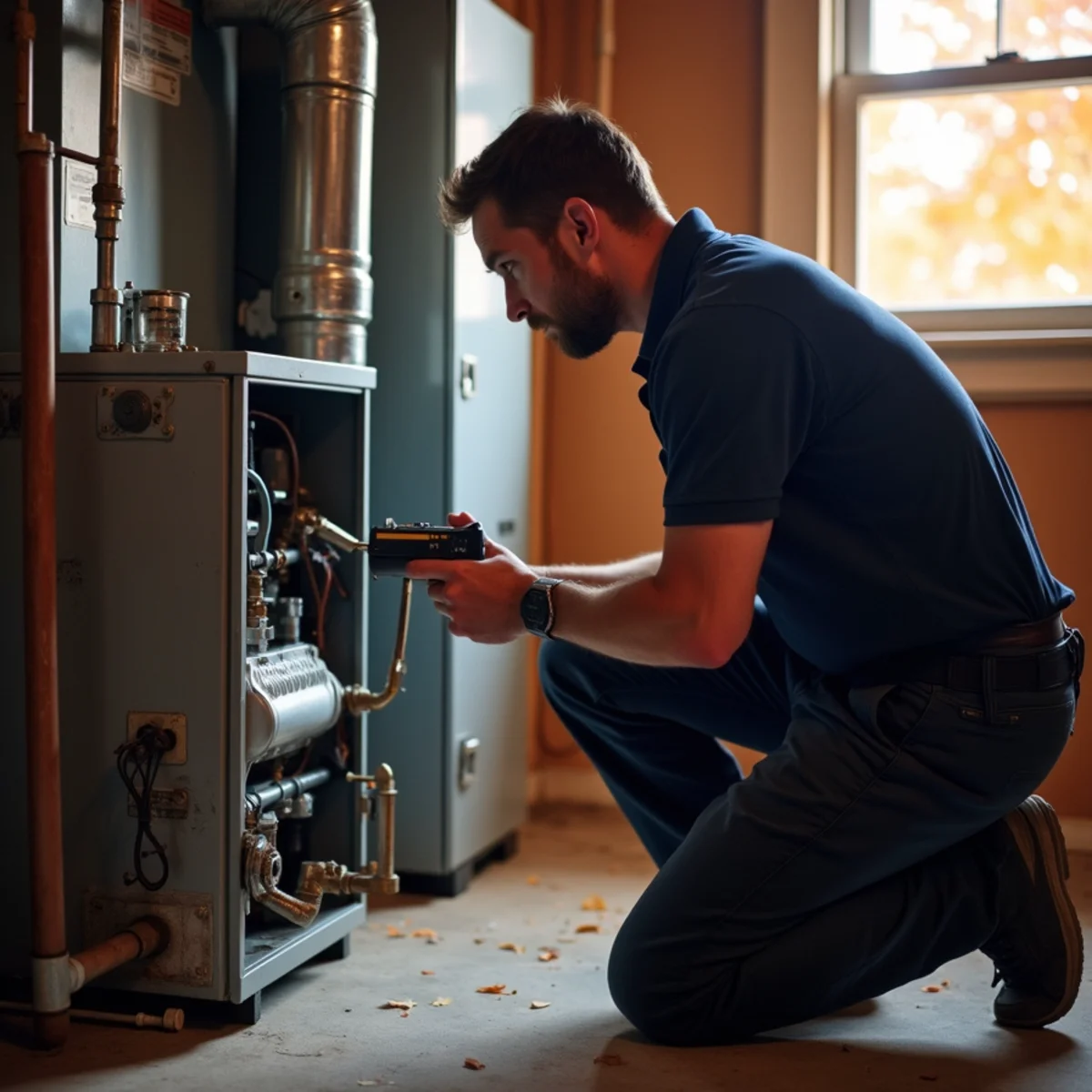
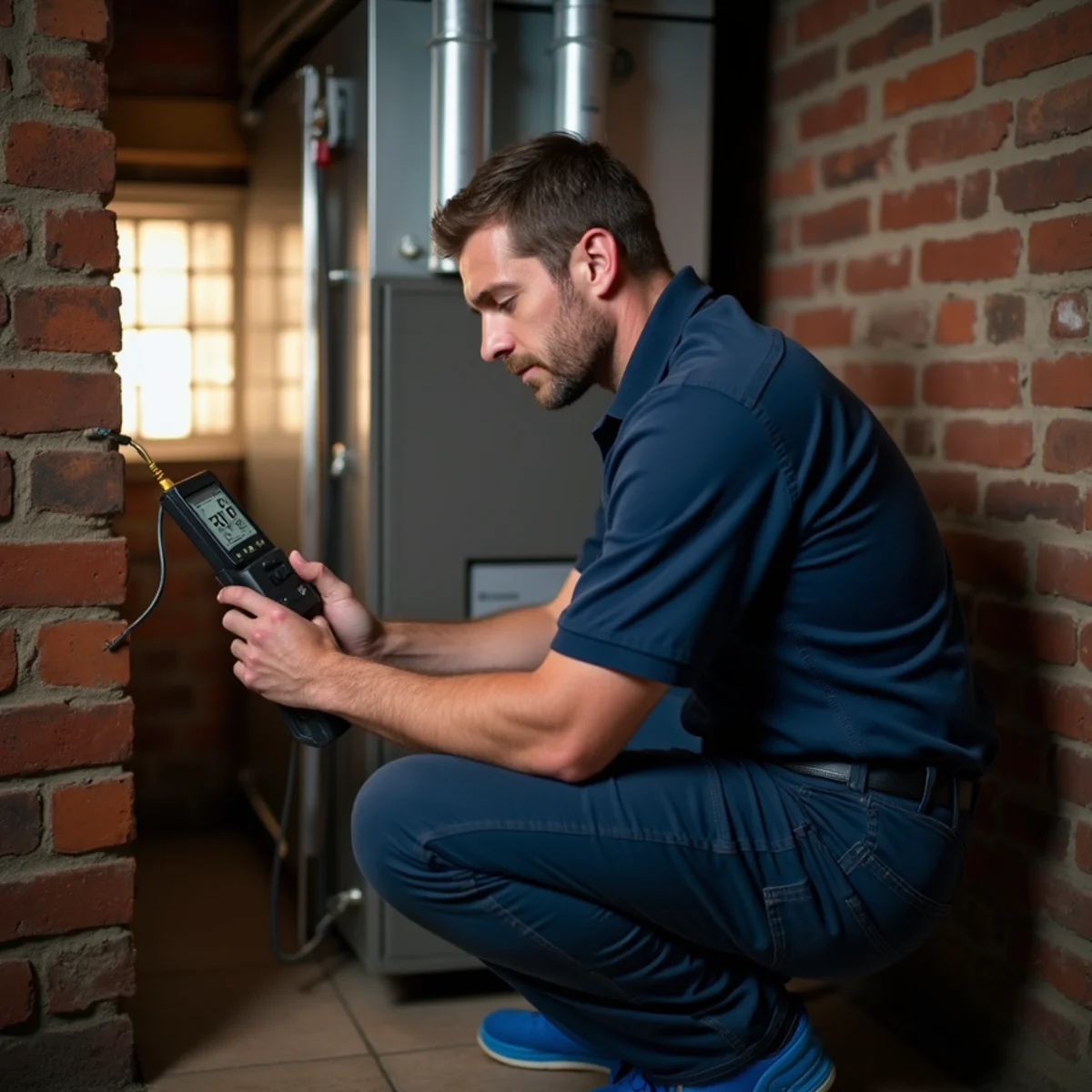
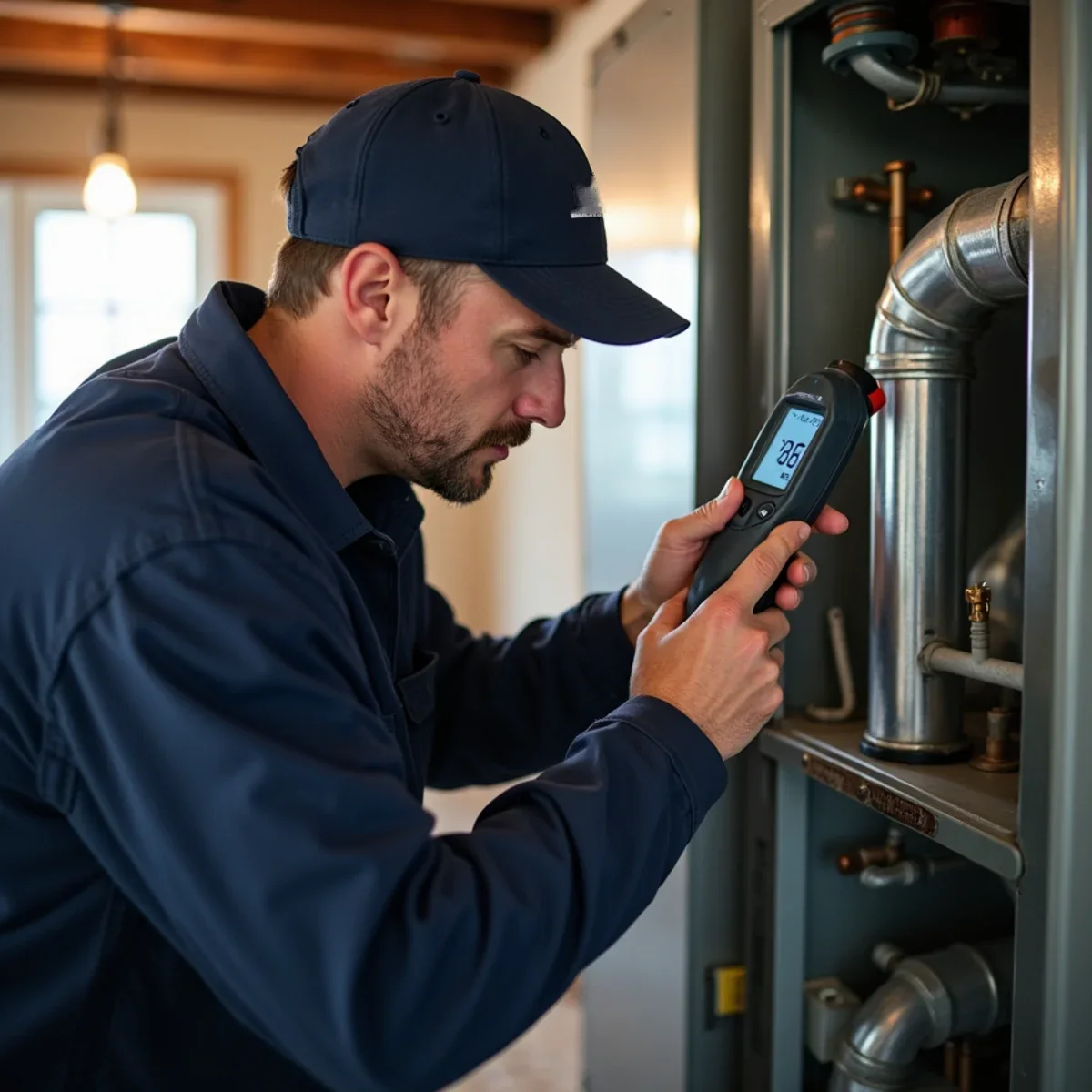
A calibrated analyzer checks oxygen, carbon monoxide and stack temperature in the flue to confirm the furnace burns and vents safely.
Heat exchanger and venting look
We inspect the heat exchanger, flue pipe, draft and, on condensing furnaces, the PVC venting and condensate trap.
Filter and temperature rise check
The filter is checked or replaced and supply-minus-return temperature is compared with the rating plate so airflow problems do not hide.
Written price before the repair
You see the cost of the fix up front, and when an older unit is running out of road, a free replacement quote sits beside it.
How a Furnace Service Call Works
- 1
Read the sequence of operation
We call for heat and watch each step: inducer start, pressure switch closing, ignitor glow, gas valve opening and flame proving. The step that fails tells us where to look.
- 2
Test the components with a meter
Ignitor resistance, flame sensor microamps, pressure switch readings and blower capacitor values are measured, not assumed.
- 3
Combustion analysis
A calibrated analyzer in the flue measures oxygen, carbon monoxide and efficiency. High CO or unstable readings lead to a closer look at the heat exchanger and venting.
- 4
Check airflow and temperature rise
We compare supply and return temperatures to the nameplate range. Too high a rise points to restrictions that stress the heat exchanger.
- 5
Repair, clean and confirm
After the fix, we cycle the furnace several times, verify safeties and draft, and explain what we found in plain terms.
Factors in Furnace Repair and Replacement Cost
We explain costs before we do the work. These are the things that change the answer from one home to the next.
- Part and availability
- Flame sensor cleaning and ignitor swaps are simpler repairs. Inducer motors, gas valves and control boards cost more, especially on older or proprietary models.
- Heat exchanger condition
- A cracked heat exchanger is a safety issue. Depending on age and warranty, it may be covered or it may make replacement the smarter move.
- Efficiency level of a new furnace
- An 80% AFUE furnace vents through a metal flue, while a 95%+ condensing model needs PVC venting and a condensate drain.
- Venting and chimney changes
- Switching to a high-efficiency furnace can orphan a water heater on an oversized chimney, which may need a liner to vent safely.
- Blower type
- Variable-speed ECM blowers cost more but run quieter, use less electricity and help with humidity control year-round.
- Financing and options
- We quote replacements free, usually with several price-point options, and financing is available on qualifying systems.
AFUE Explained: 80% vs. 95% Furnaces
AFUE (Annual Fuel Utilization Efficiency) is the percentage of gas that becomes usable heat. An 80% furnace loses about a fifth of its fuel up the chimney. A condensing furnace at 95% or higher captures heat from the exhaust with a second heat exchanger and drains the condensate.
In our heating climate, condensing furnaces usually make sense for homes staying put for several years. For a basement with no practical path for PVC venting, a well-installed 80% unit can still be the right call. We walk through both during a free replacement quote, and our article on whether to repair or replace your furnace lays out the tradeoffs.
Heat Exchangers and Combustion Safety
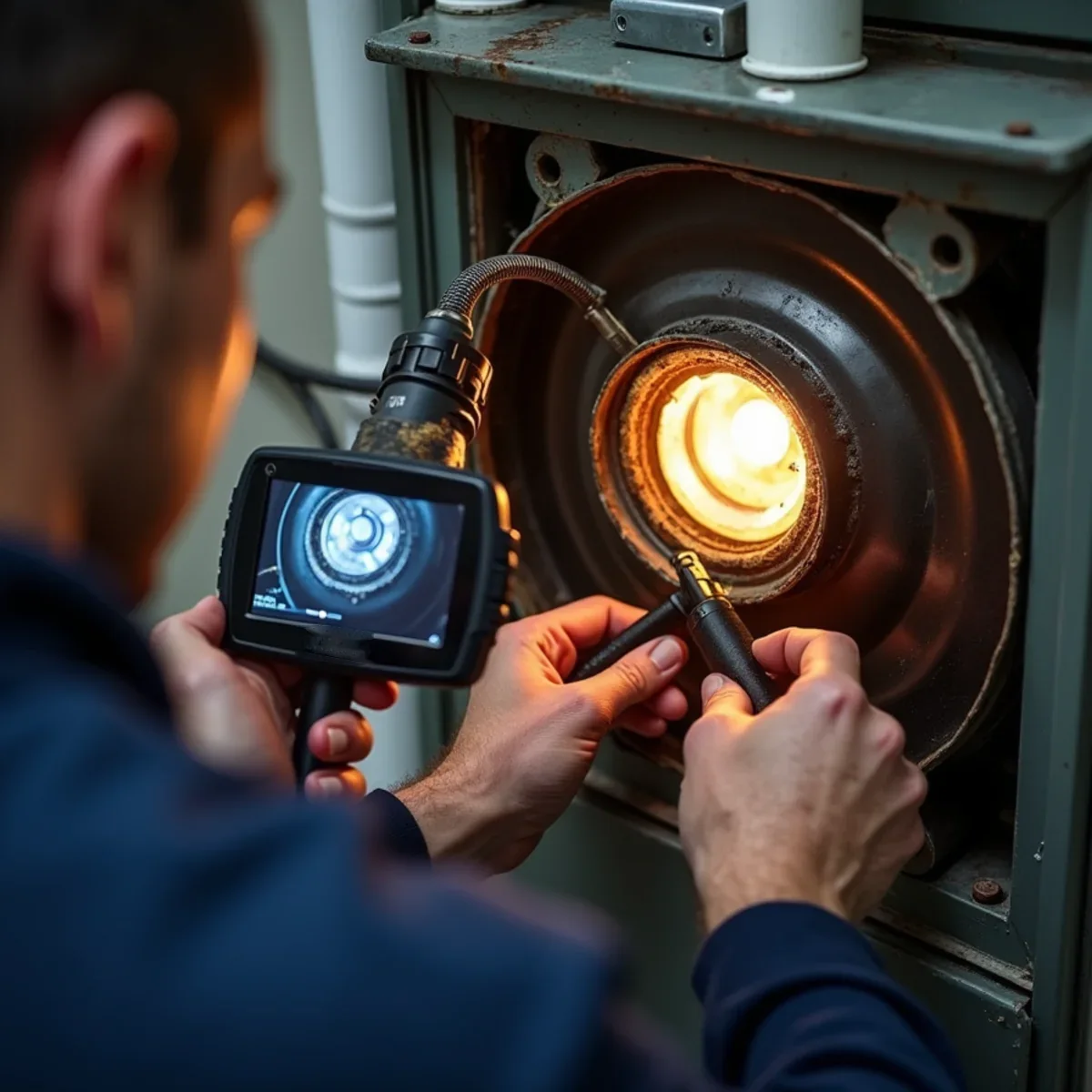
The heat exchanger separates burning gas from the air you breathe. Years of heating cycles, overheating from restricted airflow and corrosion can open cracks. A visual inspection alone can miss them, which is why we pair camera checks with combustion readings. For homes that want added protection, we install low-level CO detectors that alert at concentrations below the threshold of typical store-bought alarms. Learn more on our carbon monoxide and furnace safety page.
Ignitors, Flame Sensors and Other Small Parts
Hot surface ignitors are brittle and wear with each cycle. Flame sensors collect oxide coating that weakens the microamp signal. Both are inexpensive to address at a fall furnace tune-up and are a leading reason for no-heat calls in the first cold week of the year. If you are weighing gas heat against electric, our heat pump repair and service team can explain how dual-fuel setups work. We cover heating calls throughout Miamisburg, Springboro, Centerville and Dayton.
Furnace Troubleshooting in Depth: Stages, Codes and Winter Quirks
A gas furnace is a chain of safety checks. Each one has to pass before the next is allowed to happen, so the link that breaks tells a trained technician almost everything. This guide explains that logic in more detail than a typical service page, so you understand what we are looking at when we open the burner compartment in your basement.
Where the start-up stalls, and what it usually means
| Stage where it stalls | Frequent causes | What gets measured | Usual repair |
|---|---|---|---|
| Inducer never starts | Failed inducer motor, open door switch, no call from the thermostat, blown board fuse | Line voltage at the board, 24-volt signal from the thermostat, inducer winding continuity | Replace the inducer or fuse; repair the wiring fault that caused it |
| Inducer runs, pressure switch stays open | Snow or ice in the PVC vent, full condensate trap, cracked hose, tired inducer | Draft in inches of water column compared with the switch's rating, hose and port condition | Clear the vent or trap, replace the hose or switch, or replace a weak inducer |
| Ignitor glows, no flame | Gas valve not opening, low supply pressure, manual shutoff closed | Voltage to the valve, inlet and manifold gas pressure | Open the supply, adjust pressure, or replace the gas valve |
| Flame appears, rollout switch trips | Blocked flue passage or heat exchanger pushing flame out of the burner box | Visual and camera inspection of passages, combustion readings | Red-tag conversation if the exchanger is compromised; the rollout is never simply reset |
| Runs, then shuts down on the high limit | Dirty filter, closed registers, undersized returns, weak blower | Blower amperage, duct static pressure and how far the rise exceeds the rating plate | Airflow corrections, blower motor or capacitor replacement |
How to read a blinking furnace code before you call
Nearly every modern gas furnace carries a diagnostic LED on its control board, visible through a peephole or clear panel on the lower access cover, that flashes a numbered fault. That code is valuable, and it is easy to erase by accident.
- Look before you touch the power switch. On many boards, cutting power clears the stored fault.
- Count the flashes and note any pause pattern, for example three flashes, a pause, then three again.
- Compare the count with the chart printed on the inside of the furnace door or the service label.
- Take a photo of the chart and the model number sticker so our technician can prepare.
- Check the filter and, on a high-efficiency furnace, the two white PVC pipes outside for snow, ice or a bird's nest.
- If the code points to a limit or rollout problem, leave the furnace off and call rather than resetting it repeatedly.
Condensing furnaces and a Miami Valley winter
High-efficiency furnaces behave differently from the older metal-flue models many of us grew up with. Their exhaust is cool enough to run through PVC, and their second heat exchanger produces a steady trickle of acidic water that has to drain away. Our freeze-thaw winters test both of those features.
Drifting snow and frost buildup can close off a side-wall vent overnight, and the pressure switch shuts the furnace down to prevent exhaust from backing up. Condensate lines routed through a cold garage or crawl space can freeze solid in a January cold snap, flooding the trap and locking the furnace out. Older homes near downtown Miamisburg and in Centerville's original neighborhoods add a third issue: when a new condensing furnace leaves a gas water heater alone on a large masonry chimney, that chimney may be too big to draft properly without a liner. Our write-up on what to check when a furnace quits in an Ohio cold snap covers the safe homeowner steps.
Readings we record on a heating visit
- Temperature rise: supply air minus return air, which should fall inside the range printed on the furnace rating plate. Too high means the heat exchanger is running hot.
- Manifold gas pressure: set to the manufacturer's specification, commonly around three and a half inches of water column on natural gas for standard furnaces. Low pressure means weak heat and possible condensation in the exchanger.
- Flame signal: the microamp reading from the flame sensor, which should be steady rather than drifting down during the burn.
- Flue CO and oxygen: measured with the analyzer, then compared with CO in the living space, which should be at or near zero.
- Draft on shared chimneys: a check on any atmospheric water heater venting into the same flue, so both appliances exhaust properly.
Once the repair is done, the furnace should light smoothly without a bang, run full cycles instead of stopping short, and deliver warm air within a minute or two of the burners lighting. If it starts short cycling again or the same code returns, call us. Many of those repeat failures come from airflow or venting problems that a fall heating tune-up is designed to catch, and when the heat exchanger or inducer on an older unit gives out, a planned system replacement is usually better than a winter of patching.
Why choose Comfort Air Solutions for furnace repair
Safety testing is standard, not an upsell
Combustion analysis rides along on every heating call. One Google review describes that exact test flagging a dangerous furnace in time.
Heat restored nights, weekends and holidays
Our 24/7 emergency line is answered by a person, which matters most on the first single-digit night of the winter.
Every furnace brand welcome
Bryant® is what we install as a factory-authorized dealer, but we repair Lennox, American Standard, Tempstar, Carrier, Goodman and older nameplates just the same.
Plain answers from experienced techs
Our team brings 25+ years of heating experience and explains what failed in everyday language, with no hidden costs added after the fact.
Furnace & Heating near Miamisburg
Heating calls come from every direction around Miamisburg, but a few patterns stand out. Older homes in Oakwood and Germantown tend to have furnaces tucked into tight basements with aging chimneys, which makes venting checks especially important. Post-war ranches in Kettering often still have original ductwork feeding a newer furnace, so undersized returns show up as overheating and limit trips. We also answer plenty of no-heat calls in Dayton, Springboro, Centerville and West Carrollton through the coldest weeks of January and February.
We provide furnace & heating from our Miamisburg shop throughout the southern Dayton suburbs, including:
- West Carrollton, OH
- Moraine, OH
- Springboro, OH
- Germantown, OH
- Kettering, OH
- Centerville, OH
- Dayton, OH
- Franklin, OH
- Carlisle, OH