Quick answer
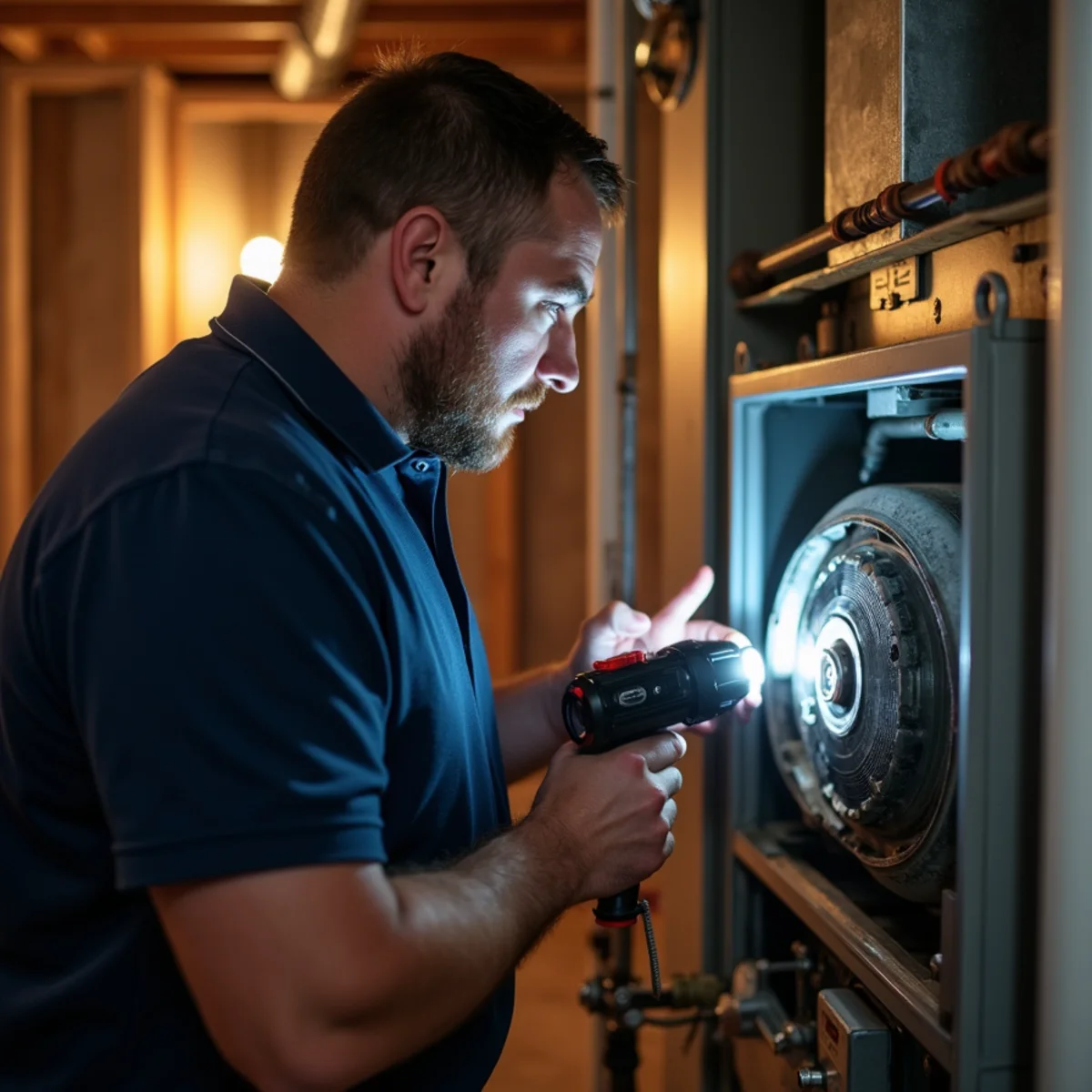
For emergency furnace repair in Miamisburg, OH, Comfort Air Solutions sends an on-call technician any hour of a cold night, with ignitors, flame sensors, pressure and limit switches and blower parts already on the truck. We check for carbon monoxide before relighting anything, and you approve the written repair price before work begins.
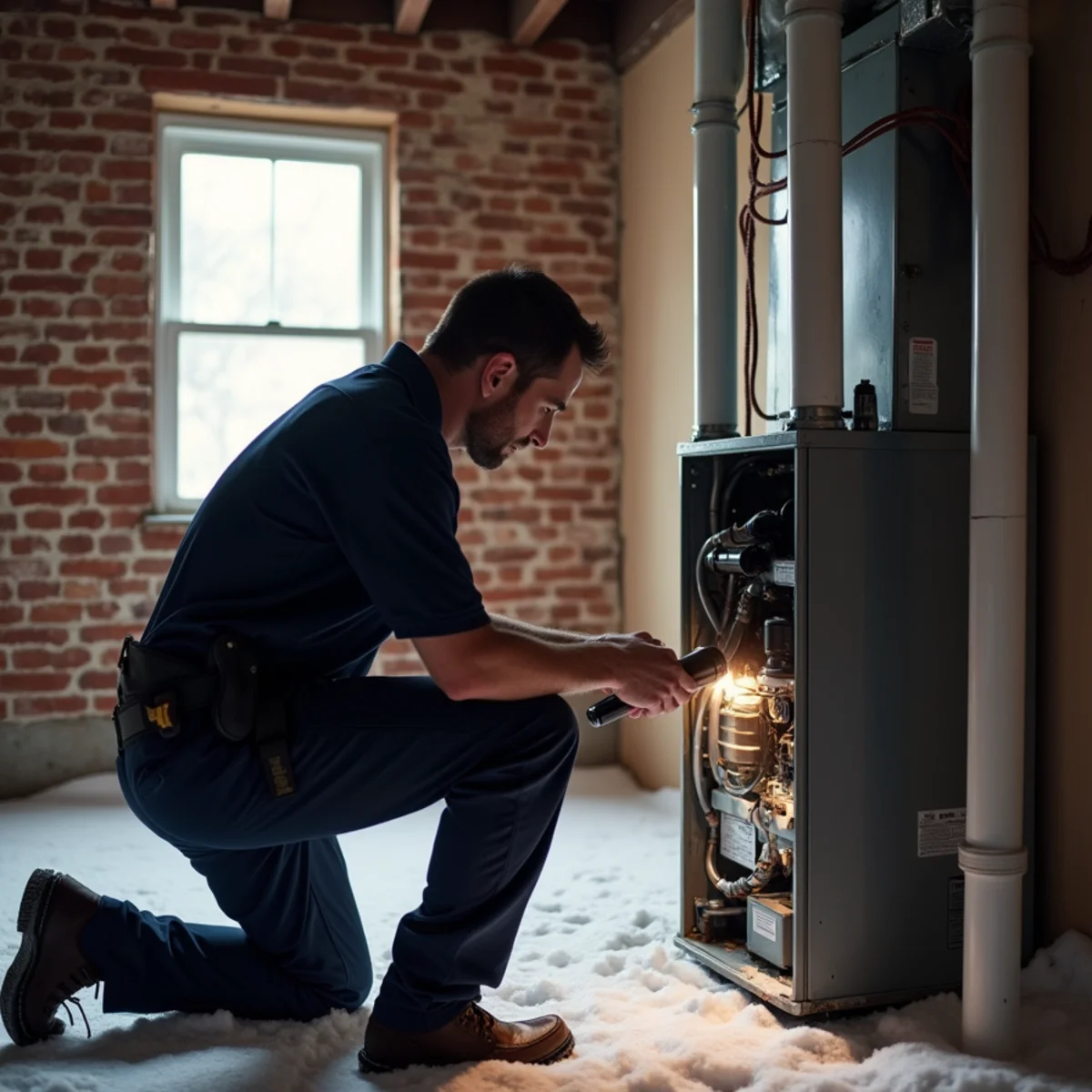
A furnace that dies in the middle of an Ohio cold snap is more than uncomfortable. Once outdoor temperatures sit in the teens, an average house can lose several degrees an hour, and water lines in exterior walls, under sinks and in crawl spaces start to face real freeze risk.
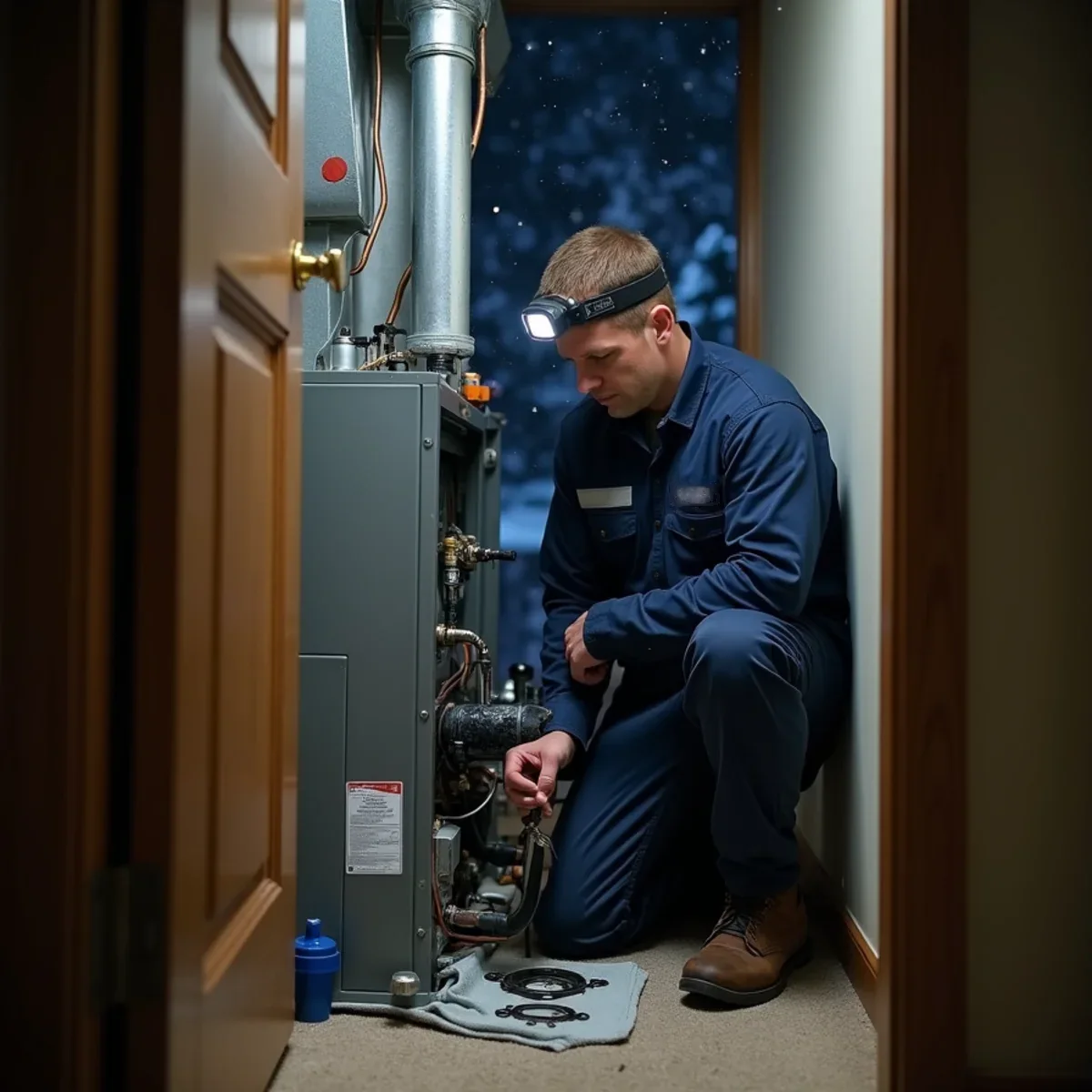
Comfort Air Solutions handles no-heat calls day and night across Miamisburg and the Miami Valley. Our technicians carry ignitors, flame sensors, pressure switches, limit switches, capacitors and universal blower motors, so the most common winter failures get fixed on the first visit. If you want the full picture of how our after-hours line works, start with our 24/7 emergency HVAC dispatch page.
No-heat symptoms and what they usually mean
Furnace clicks and tries to start, then quits
Often a dirty or worn flame sensor. The burners light, the control board cannot confirm flame, and it shuts the gas valve for safety.
No orange glow before the burners light
Hot surface ignitors are brittle and crack with age. A cracked ignitor never gets hot enough to light the gas.
Inducer motor hums but nothing lights
The pressure switch may not be proving draft because of a blocked vent, a cracked hose, or water in the collector box of a high-efficiency furnace.
Burners light, then shut off after a few minutes
A tripping high-limit switch points to overheating, most often from a clogged filter, closed registers or a weak blower.
Blower runs but air from the vents is cold
The burners have locked out while the fan keeps running, or a condensate issue has shut down the heat side.
Loud squeal, grinding or burning smell from the blower
Worn bearings or a failing blower motor. Turn the system off at the thermostat to avoid further damage.
Seeing one of these signs?
Call now — we dispatch fast and give you written options before any work.
What a no-heat emergency visit includes
Everything below happens before we call the furnace fixed and leave you for the night.
CO and gas check at the appliance
Ambient carbon monoxide and a sniff test around the gas train, done before any panel comes off.
Fault-code and lockout history
We read the board’s blink code and, where the control stores it, the recent lockout history, so an intermittent failure does not hide.
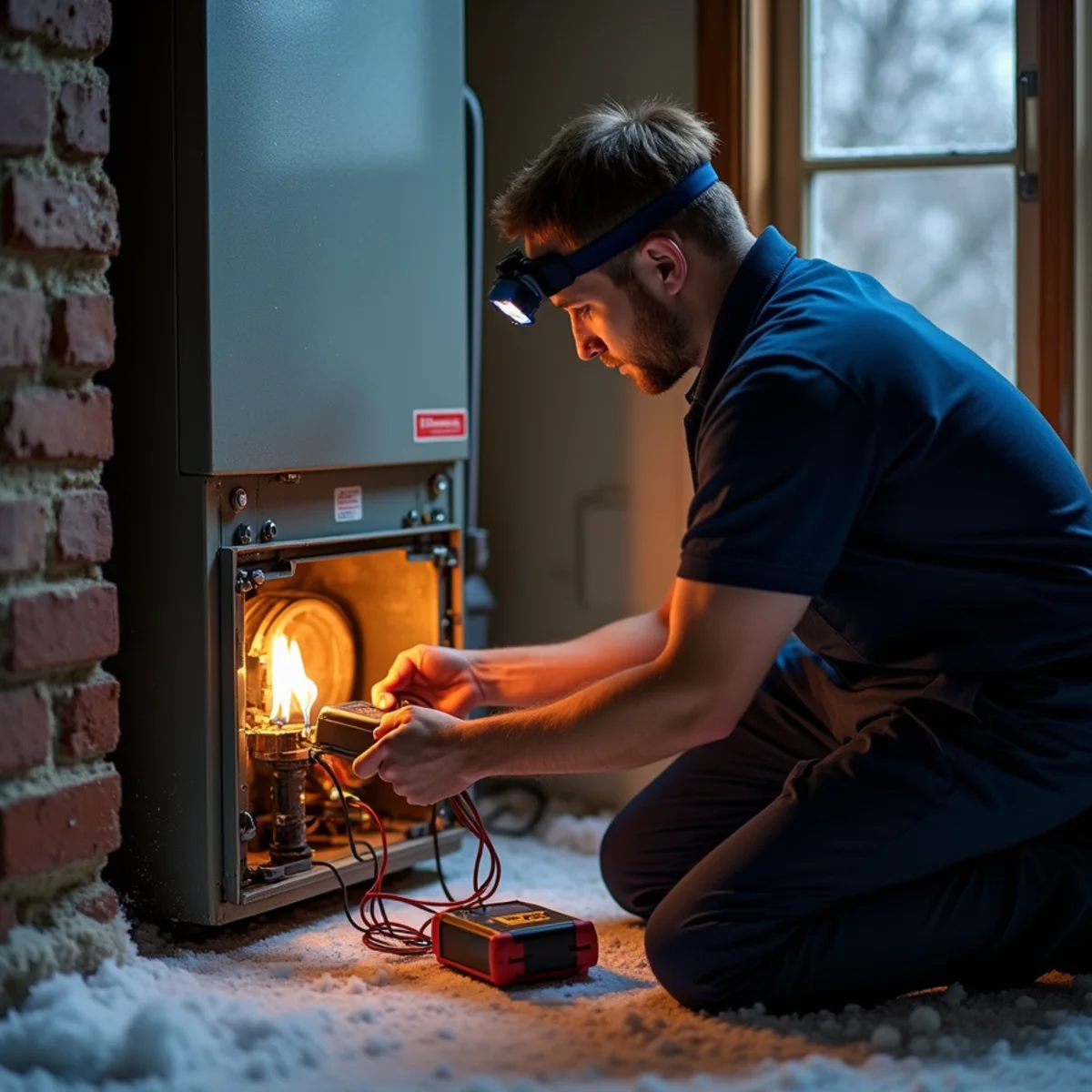
Flame sensor microamp and ignitor test
Measured readings, not guesswork, on the two parts that cause most January no-heat calls.
Venting and draft verification
Inducer, pressure switch hoses and flue or PVC vent run are checked for blockage, ice and water.
Heat exchanger look and temperature rise
After the repair we measure supply and return temperatures and inspect the heat exchanger area for cracks, rust or scorching.
Pipe-freeze advice for the hours ahead
If heat cannot be restored tonight, we point out the vulnerable plumbing and talk through safe temporary heat.
How we restore heat on an emergency call
- 1
Safety first, on arrival
We check for gas odor and carbon monoxide near the appliance before opening anything. If readings are unsafe, the furnace stays off.
- 2
Read the fault code
Most modern furnaces blink a diagnostic code on the control board. It narrows the search to ignition, draft, limit or flame problems.
- 3
Test the sequence of operation
We watch each step, from call for heat through inducer, pressure switch, ignition and flame proof, measuring voltage and microamps along the way.
- 4
Explain the fix and the options
You hear what failed, why, and what it costs to repair before we begin. If the furnace is near the end of its life, we tell you that honestly too.
- 5
Repair and verify
After the repair we run full heating cycles, check temperature rise across the heat exchanger, and confirm the flue is drafting correctly.
What influences the cost of a no-heat repair
No two furnace failures are identical, so we price the repair after diagnosis and before any work begins.
- The failed component
- A flame sensor cleaning is quick. An inducer motor or control board involves more parts and labor.
- Furnace type and brand
- Single-stage, two-stage and modulating furnaces use different controls, and some brands require proprietary parts.
- After-hours timing
- Overnight, weekend and holiday calls involve different labor than a weekday appointment.
- Secondary damage
- An overheating furnace can take out a limit switch, a blower capacitor and wiring at once.
- Venting or condensate issues
- Frozen PVC intake and exhaust pipes, or a frozen condensate drain on a high-efficiency furnace, add time to the call.
Protecting your pipes while the heat is out
Open cabinet doors under kitchen and bathroom sinks on outside walls so warmer room air reaches the plumbing. Let a thin stream of water run from faucets fed by exposed lines, and keep interior doors open so heat from any source spreads through the house.
Older homes near downtown Miamisburg and the Mound area often have plumbing running through uninsulated crawl spaces or rim joists, which are usually the first places to freeze. If you know where those lines run, check on them every hour or two until heat is back.
Space heater safety in a no-heat emergency
- Plug electric space heaters directly into a wall outlet, never an extension cord or power strip.
- Keep at least three feet clear around them, away from bedding, curtains and furniture.
- Never use a gas oven, grill or camp heater indoors for warmth. They produce carbon monoxide.
- Turn portable heaters off when you leave the room or go to sleep.
- Test your CO alarms now. Should one go off, get outdoors first, then phone 911 or the gas company.
Why Ohio furnaces fail on the coldest nights
A furnace that runs a few cycles a day in November may run nearly nonstop at five degrees. That extra runtime exposes weak parts: a cracked ignitor that barely worked, a blower capacitor losing strength, or a high-efficiency furnace whose PVC exhaust ices over in blowing snow.
A fall tune-up catches most of these failures early, and our furnace repair and heating service team can also run a combustion analysis to confirm the furnace is burning cleanly. Aging furnace failing again? See how we weigh repairing versus replacing a Miamisburg furnace. We answer no-heat calls throughout Springboro and southern Montgomery County.
No-heat culprits hiding outside the cabinet
Plenty of winter lockouts start outside the burner compartment. Each of these is safe for a homeowner to check:
- Blower door not seated. Most furnaces have a small push switch under the lower panel. If the door was bumped while changing a filter, the furnace will not fire at all.
- Snow drifted over the side-wall pipes. High-efficiency furnaces breathe through two white PVC pipes. Gently brush away snow or ice, but do not pull the pipes apart.
- Gas valve handle turned crosswise. The handle on the supply line near the furnace should run parallel to the pipe. If it is not, leave it and tell us, because someone closed it for a reason.
- A silent condensate pump. If the little pump beside the furnace is full of water and not running, its safety switch has probably shut the heat off.
- Propane running low. Rural homes toward Germantown and Farmersville on bottled gas should check the tank gauge before anything else.
No-heat diagnostics: the readings behind a furnace lockout
Our 24/7 hub page covers routing the call and protecting the house. This guide stays inside the furnace cabinet. It lays out how a technician works from a blinking light to a confirmed failed part on a cold night, and why swapping parts until the heat comes on is the wrong way to do it.
Fault by fault: what we measure and what usually fixes it
| What happens | Likely cause | What we test | Typical fix |
|---|---|---|---|
| Tries to light several times, then stops | Flame not proven: dirty sensor, poor ground, weak flame | Flame signal in microamps against the maker's spec, burner ground path | Clean or replace the sensor, repair the ground |
| No glow, gas never opens | Cracked ignitor or no voltage to it | Ignitor resistance in ohms, voltage at the plug during the trial | Replace the ignitor and find what cracked it |
| Inducer runs, board shows a draft code | Pressure switch not closing | Switch set point against a manometer, hose, collector box and condensate trap | Clear the trap or vent, replace a hose or switch |
| Lights, heats briefly, shuts off | High limit opening from overheating | Temperature rise against the nameplate range, static pressure, blower amps | Correct airflow; replace the limit only if it tests weak |
| Flame rolls out, manual-reset switch tripped | Blocked flue or heat exchanger restriction | Draft, flue passages, combustion analysis | Find the blockage; the furnace stays off until it is cleared |
| Nothing at all, thermostat blank | Blown low-voltage fuse or dead transformer | 24-volt circuit, shorted thermostat or outdoor wire | Repair the short, then replace the fuse |
Notice how often the fix is something other than the part that tripped. A limit switch that opens is usually telling the truth about an overheating furnace, and a new one will trip too if the filter or blower is the real problem.
Blink codes point to a circuit, not a part
Most furnaces built in the last few decades flash a code on the control board through a small window in the blower door. Take a photo of it before you cut power, because shutting the furnace off clears the code on many models. The code narrows the search to ignition, draft, limit or flame circuits, and that is where its usefulness ends.
A pressure-switch code, for example, can mean a failed switch, a split rubber hose, a plugged condensate trap or ice in the exhaust. Many boards also retry on their own after a lockout period of roughly an hour, which is why some people report that the heat mysteriously came back overnight and quit again by morning.
80% and high-efficiency furnaces fail differently in the cold
- Standard-efficiency (80%) furnaces vent hot flue gas up a metal pipe, often through a masonry chimney shared with the water heater. We look for rusted vent connectors, a blocked or unlined chimney, and heat exchanger stress from years of short cycling.
- High-efficiency (90%+) furnaces cool the exhaust enough to make condensate. That water has to drain through a trap and tubing, and when a drain line runs through a cold garage or crawl space it can freeze and shut the furnace down.
- Sidewall PVC venting on newer houses can frost over or get buried by drifting snow. Intake and exhaust terminations need clearance above the expected snow line.
- Two-stage and modulating furnaces carry more sensors and a more complex board, so a code may reflect a communication fault rather than a burner problem.
Safety calls we will not shortcut, even at 3 a.m.
A tripped rollout switch, soot around the burner opening, a flame that lifts or wavers when the blower starts, or carbon monoxide climbing in the flue sample all mean combustion is not happening the way it should. In those cases we leave the furnace off and explain why, and our carbon monoxide and combustion safety service takes over from there. We would rather lend a space heater and return in daylight than relight an appliance we cannot vouch for.
For the homeowner side of a winter breakdown, our article on what to do when the furnace quits in an Ohio cold snap pairs well with this checklist.
Why choose Comfort Air Solutions for emergency furnace repair
Combustion safety on a cold-night call
A relit furnace with a bad heat exchanger is worse than no heat. Our technicians run combustion analysis, and a test like that has flagged unsafe furnaces for our customers.
Parts for every make on the truck
We are a factory-authorized Bryant® dealer, but most winter repairs are on other brands, and we stock universal ignitors, sensors and switches to match.
Straight talk about an old furnace
With 25+ years in the trade, our team will tell you when a repair makes sense and when a tired 80% furnace is not worth another part. Replacement quotes are free and come in writing.
Fan Club members go to the front
Comfort Air Fan Club members get priority service and no diagnostic fee, which matters most when a cold snap fills the phone lines.
Emergency Furnace Repair near Miamisburg
The heaviest no-heat nights bring calls from older housing: 1950s brick ranches in Kettering, century homes in Germantown with basement furnaces and tight crawl spaces, and small-town neighborhoods in Carlisle and Franklin along the Great Miami. Newer high-efficiency furnaces in Centerville subdivisions fail differently, usually on iced PVC venting or condensate. We cover all of them from our Miamisburg shop.
We provide emergency furnace repair from our Miamisburg shop throughout the southern Dayton suburbs, including:
- West Carrollton, OH
- Moraine, OH
- Springboro, OH
- Germantown, OH
- Kettering, OH
- Centerville, OH
- Dayton, OH
- Franklin, OH
- Carlisle, OH