Quick answer
If your furnace is not working in a cold snap, confirm the thermostat is on Heat with fresh batteries, check the furnace switch and breaker, replace a clogged filter, make sure the gas valve handle lines up with the pipe, and clear snow or frost from the PVC vent pipes. Still no heat? Note the blink code and call.
When the furnace quits on a single-digit night, a few safe checks can restore heat in minutes. Here is what to look at, what the blinking light means, and when to stop.
If your furnace is not working during a hard freeze, start with the simple stuff: confirm the thermostat is calling for heat, make sure the furnace switch and breaker are on, pull the filter, and look outside at the white plastic pipes for snow or ice. Those four checks solve a surprising number of no-heat calls without a service visit.
If none of them bring the burners back, the problem is usually a worn part that finally gave up under a long run cycle. That is when you want a technician with a stocked truck, not a trip down a video rabbit hole.
Five safe checks before you call for service
1. The thermostat
Set it to Heat, not Cool or Off, and raise it three or four degrees above room temperature. Battery-powered thermostats often go blank or act strangely when the batteries are weak, and a dead thermostat looks exactly like a dead furnace.
2. Power to the unit
Most furnaces have a light-switch style service switch on the wall or the side of the cabinet, and people flip it off by accident all the time. Check the breaker panel too. If the breaker trips a second time after you reset it, leave it off and call.
3. The filter
A packed filter chokes airflow until the heat exchanger overheats and the high-limit switch shuts the burners down. The blower keeps running, so you feel lukewarm or cold air. Swap it and give the system 15 minutes.
4. The status light
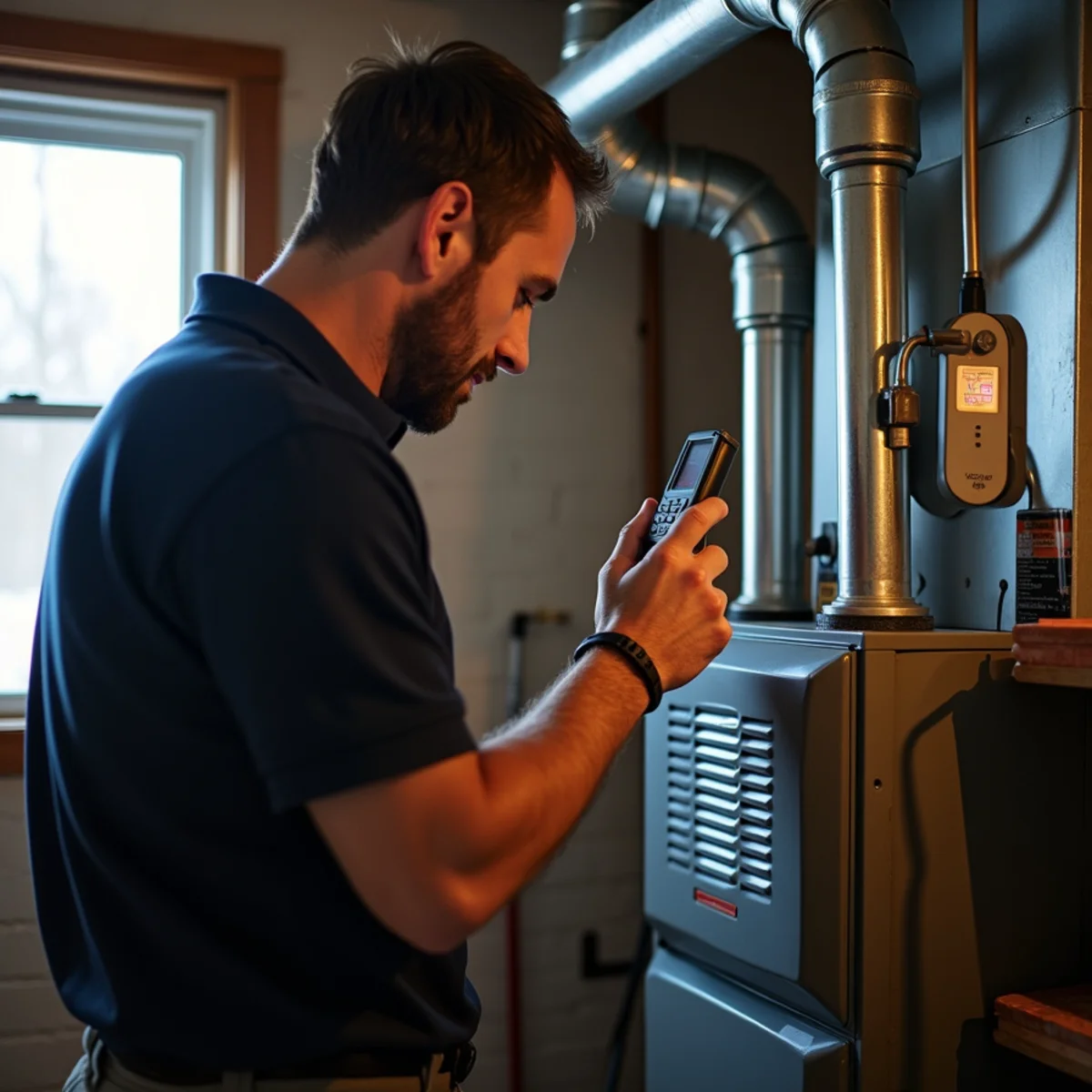
Pull the lower door and look for a small LED through the peephole on the control board. Count the flashes and match them to the chart printed inside the door. Write the code down; it saves real diagnostic time when the tech arrives.
5. The PVC intake and exhaust
High-efficiency furnaces breathe through two plastic pipes on a side wall or the roof. Drifting snow or a frost cap on the exhaust will trip the pressure switch and lock the furnace out. Gently clear the openings by hand, never with a hammer or a heat gun.
Reading the symptom: what usually failed
| What you notice | Likely cause | Homeowner fix? |
|---|---|---|
| Burners light for a few seconds, then shut off | Dirty or weak flame sensor | No, needs cleaning or replacement |
| Inducer motor runs, no glow, no flame | Cracked hot-surface ignitor | No, a part swap |
| Inducer runs, code points to pressure switch | Blocked vent, frozen condensate trap or failed switch | Clear vent openings only |
| Blower runs nonstop, air is cold | Tripped limit switch from poor airflow | Change the filter, open supply registers |
| Nothing at all, no lights | Power, a blown low-voltage fuse or a bad transformer | Check switch and breaker |
Why cold snaps finish off tired parts
In mild weather a furnace cycles on and off a few times an hour. When the wind chill drops below zero, it may run nearly nonstop, and every part that was marginal in October gets pushed to its limit.
Flame sensors and ignitors
The flame sensor is a thin metal rod that proves to the control board that gas is actually burning. A light coating of oxidation weakens its signal, and the board shuts the gas valve as a safety measure. Silicon-nitride ignitors, meanwhile, develop hairline cracks over hundreds of heat cycles and eventually stop glowing.
Condensate traps on high-efficiency furnaces
A 90-plus AFUE furnace makes water as part of normal operation. If the drain line runs through a cold garage or crawlspace, it can freeze, the trap backs up, and the pressure switch opens. We see this in older split-levels in West Carrollton where a newer furnace was fit into a space designed for an older 80 AFUE unit.
Limit switches and blower motors
Restricted return air, closed-off rooms and aging blower capacitors all push the heat exchanger hotter. The limit switch does its job and cuts the burners, but repeated trips are a warning sign that something upstream needs attention.
When to stop troubleshooting
- You have reset the furnace twice and it locks out again
- You hear a boom or loud rollout when the burners ignite
- You see scorch marks, melted wire insulation or soot around the burner area
- Water is pooling under the furnace or dripping from the cabinet
- Anyone in the house has a headache or nausea that fades outdoors
Any of these points to a repair that needs meters, a combustion analyzer and replacement parts. Our emergency furnace repair crew carries common flame sensors, ignitors, pressure switches and capacitors, so most no-heat calls in Kettering and the surrounding suburbs are fixed on the first visit.
Keeping the next cold snap uneventful
Nearly every failure in the table above shows early signs during a fall inspection: a flame signal reading that is drifting low, an ignitor with visible stress marks, a trap half full of sludge. A yearly furnace tune-up and heating service catches those while it is still 50 degrees outside and parts are easy to get.
If your house is cold right now, do the five checks, write down the blink code and call our Miamisburg office. Someone answers the phone around the clock, and we will get a technician headed your way.
A deeper no-heat guide: know your furnace, rule out the look-alikes, protect the house
Generic troubleshooting lists assume every furnace is the same machine. They are not. A 1970s standing-pilot unit in a Dayton bungalow fails differently from a condensing furnace in a newer Springboro two-story, and the safe homeowner checks change with it. Start by identifying what is in your basement, then work through the look-alike problems below before deciding the furnace itself has failed.
Match the checks to the furnace you own
| Furnace type | How to recognize it | Typical cold-snap failure | Safe first move |
|---|---|---|---|
| Older standing-pilot furnace | Small blue pilot flame visible through a window, metal flue into a chimney | Pilot blown out or a worn thermocouple | Relight only by the label instructions; if it will not hold, call |
| Mid-efficiency (80 AFUE) furnace | Metal flue pipe, small draft inducer motor on the cabinet | Flame sensor, ignitor or inducer pressure switch | Check filter, switch and blink code |
| High-efficiency (90-plus AFUE) furnace | Two white PVC pipes, a drain hose and trap | Frozen vent termination or backed-up condensate | Clear snow from pipe ends, check the drain |
| Propane furnace | Tank in the yard instead of a gas meter | Empty or near-empty tank | Read the tank gauge; call the supplier before relighting |
| Heat pump with gas or electric backup | Outdoor unit runs in winter, thermostat shows Aux or Em Heat | Defrost or backup-heat problem | Leave it on Heat; see our heat pump notes |
If your system is a dual-fuel setup, the logic is different enough that our heat pump versus gas furnace comparison is a better starting point than this page.
Problems that look like a dead furnace but are not
A good share of winter calls end with the technician fixing something outside the burner compartment. These are worth ruling out first because most of them take seconds:
- Fan set to On instead of Auto. The blower runs all the time, so between burner cycles the registers push room-temperature air that feels cold on your hand.
- Lower door not seated. Furnaces have a door safety switch; a panel put back slightly crooked after a filter change keeps the whole unit off.
- Thermostat schedule or vacation hold. A smart thermostat left in an away mode, or one running on a weak power wire, can quietly stop calling for heat.
- Full condensate pump. The small pump beside many basement furnaces has a float switch that shuts the furnace down when it cannot empty.
- Gas turned off upstream. If the utility shut the meter off, do not try to turn it back on yourself; the utility has to restore service and relight appliances.
- Humidifier or zone damper stuck. Rare, but a closed zone damper can starve one floor while the furnace runs normally.
If a winter storm knocks the power out
Ice storms roll through Montgomery and Warren counties most winters, and a gas furnace is useless without electricity. Keep doors to unused rooms closed, gather people in one interior room, and hang blankets over drafty windows. If you use a portable generator, the CDC advises placing it outdoors more than 20 feet from the house, away from windows and vents, and never in a garage, even with the door open. A carbon monoxide alarm with a battery backup matters most during exactly this kind of outage.
When power returns, the furnace may need one full thermostat cycle to reset. If it still sits dark after the lights come back, check the furnace breaker, because outage surges trip them more often than people expect.
What our technician checks, in order, and why
- Confirm the call for heat at the control board, which separates thermostat and wiring faults from furnace faults in a couple of minutes.
- Read stored fault codes, since the last several lockouts often tell a clearer story than the one blinking now.
- Measure flame signal in microamps to decide between cleaning a sensor and replacing it.
- Test the ignitor and inducer circuit, including the pressure switch reading with a manometer on high-efficiency units.
- Check gas pressure at the valve, because low pressure produces weak flames and nuisance lockouts that look like part failures.
- Measure temperature rise across the heat exchanger and compare it with the nameplate range to confirm airflow is correct.
- Run a combustion analysis before leaving, so a furnace that now lights is also burning cleanly. Our carbon monoxide safety testing page explains what those readings mean.
That sequence is the reason a repair usually sticks. Swapping an ignitor without checking why it cracked, whether from a weak inducer, a short-cycling thermostat or low voltage, just sets up the same no-heat call a month later. When the diagnosis finds heat-exchanger cracks, or the furnace has seen more than twenty winters, the conversation shifts to whether a furnace repair or replacement makes more sense, and you get written options either way.
Homeowners in Centerville and Dayton can use the same checklist; the housing stock varies, but the order of checks does not.
From our technicians
What our technicians actually find on January no-heat calls
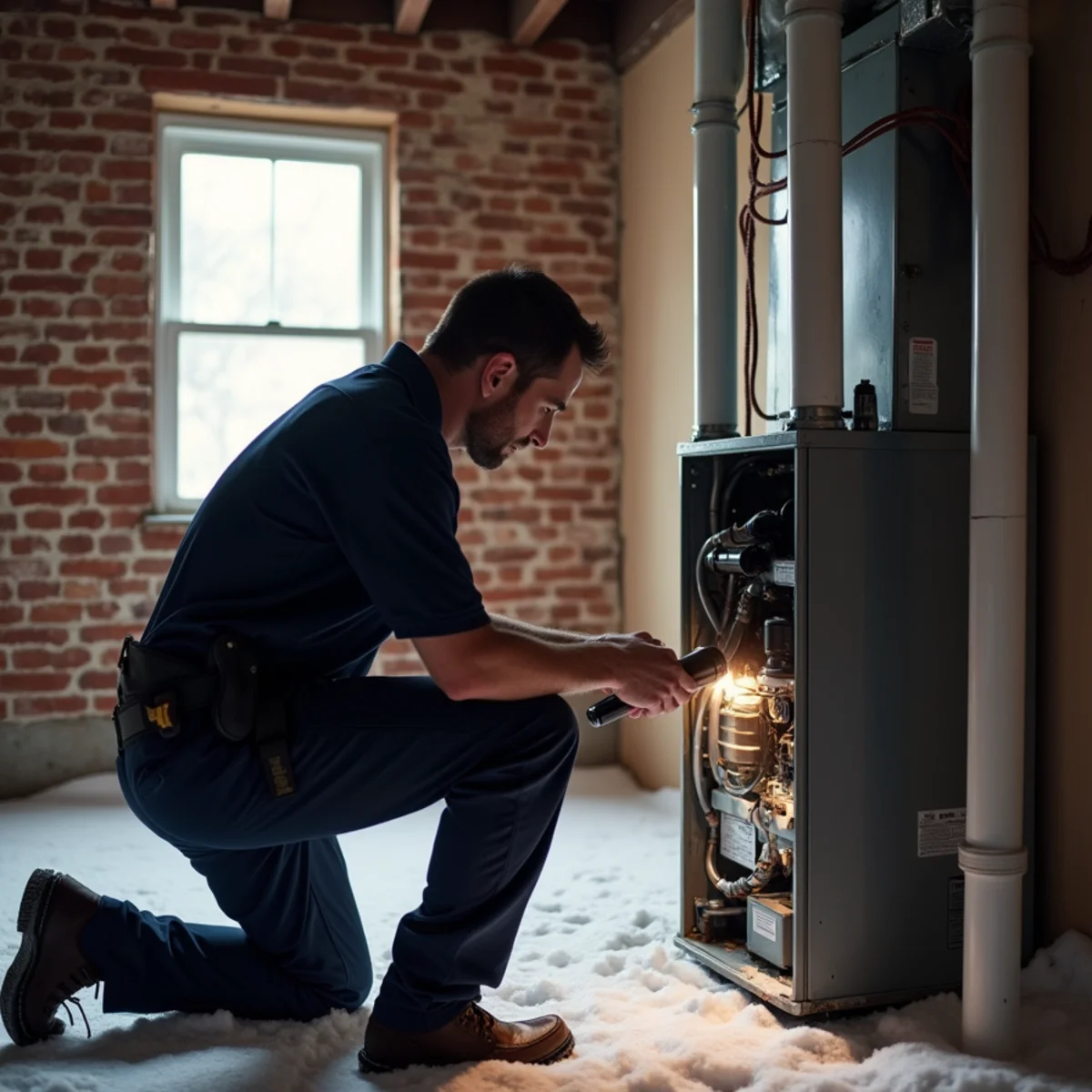
On a typical single-digit morning, the first handful of no-heat calls we run are rarely exotic. The most common finding is a flame sensor with a dull, frosted coating reading well below the signal the board wants to see, followed closely by a hot-surface ignitor with a hairline crack you can only spot with a flashlight at an angle. Both are ten-minute fixes when the part is on the truck, which is why we stock them heavily from November on.
The second pattern is homeowner-made, and nobody should feel bad about it. A filter that was fine at Thanksgiving is packed by mid-January because the blower has been running twice as long. People also close supply registers in spare bedrooms to push heat elsewhere, which raises static pressure and makes the limit switch trip. Opening those rooms back up often helps more than turning the thermostat higher.
On high-efficiency furnaces, look outside before you look inside. Blowing snow stacks against side-wall vents on the windward side of a house, and a frozen condensate line in an unheated garage mimics a dead furnace. We also see gas valves left in the off position after a water heater swap or a plumber's visit.
One honest tradeoff: a furnace that needs its third ignitor in four winters and has a rusty burner box is telling you something. We will fix it to get you warm tonight, then give you a plain-English look at repair versus replacement once the weather breaks.
Want a technician to take a look?
Comfort Air Solutions serves Miamisburg, Dayton and the Miami Valley — 24/7 emergency service.
- 4.8★ · 32 Google reviews
- 25+ years’ experience
- Written options before work
- Factory-Authorized Bryant® Dealer