Quick answer
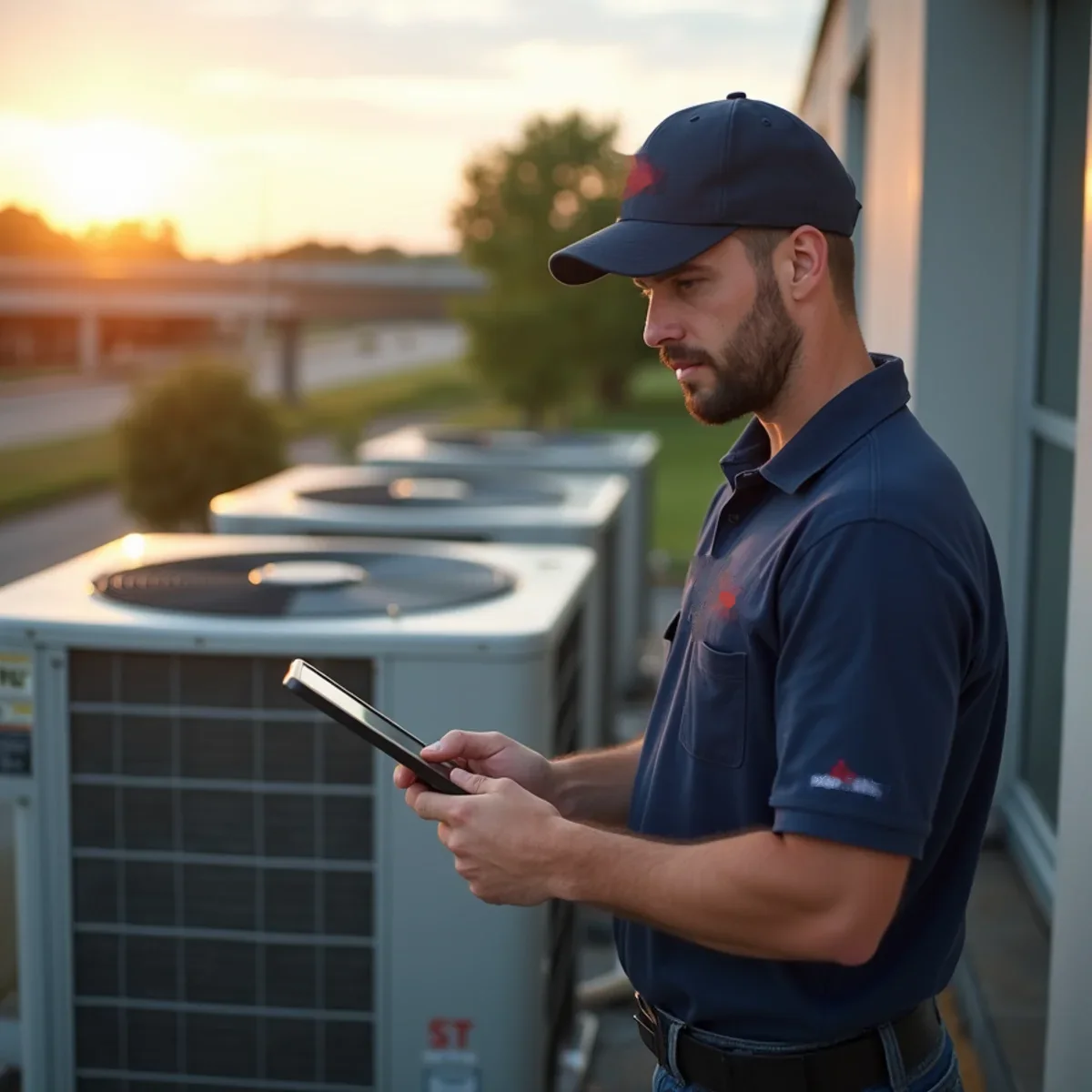
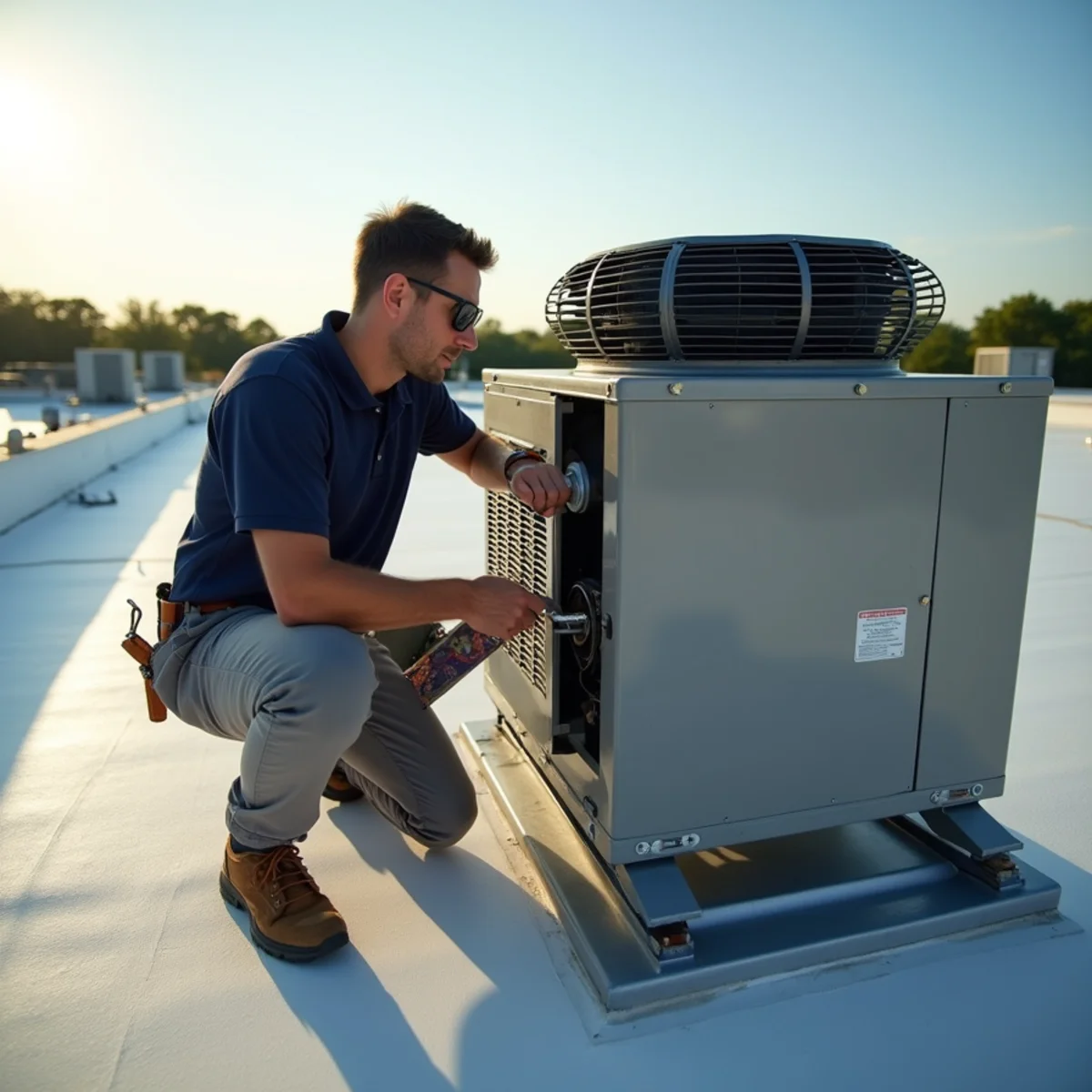
Rooftop unit maintenance means a technician on the roof at least every spring and fall, getting the cooling side ready before May and the gas heat ready before November, while filters get checked monthly and swapped on a one- to three-month cycle. Visits cover belts, the economizer, coils, drains, electrical parts, refrigerant readings and, on gas units, a combustion check.
What rooftop unit maintenance should cover for small businesses in Moraine and Miamisburg: economizers, belts, filters, coils, drains and curbs, plus a quarterly PM schedule that fits Ohio weather.
Short answer: a packaged rooftop unit needs professional maintenance at least twice a year, spring and fall, with filter changes every one to three months. Each visit should cover filters, belts, economizer operation, coil cleaning, condensate drains, electrical components, refrigerant readings and, on gas-fired units, a heating-section safety check. Skip it and the unit usually fails on a busy day, not a slow one.
Moraine and Miamisburg are full of the kind of buildings RTUs were made for: flex space off Dryden Road and Springboro Pike, light industrial along the I-75 corridor, strip retail and medical offices near the Dayton Mall. Most of those owners and managers are not HVAC people. This guide is for them.
Why Rooftop Units Wear Out Faster Than You Expect
An RTU lives outside year-round. It bakes in July, sits under snow and ice in January and takes every thunderstorm the Miami Valley throws at it. It also usually runs longer hours than a home system, often with the fan in constant-on mode during business hours to meet ventilation requirements.
Out of sight also means out of mind. Nobody walks past a rooftop unit and notices the squealing belt or the drain pan full of standing water until the space gets warm and a tenant calls.
The RTU Maintenance Checklist
Airflow: filters and belts
- Filters: changed on a set schedule. Loaded filters in an RTU drop airflow, freeze coils and drive up static pressure on the supply fan.
- Belts: inspected for cracking and glazing, tensioned correctly and replaced before they snap. A spare belt on the unit is cheap insurance.
- Pulleys and bearings: alignment checked, bearings listened to and greased where fittings exist.
Economizer
The economizer brings in outside air for free cooling when conditions allow. When it works, it saves compressor run time in spring and fall. When the damper actuator fails or the linkage seizes, it often sticks wide open, dumping hot humid air into the building in July or freezing coils in January. We test actuator travel, check the enthalpy or temperature sensor and confirm the minimum outside-air position.
Coils and refrigerant
- Condenser coil: cleaned with a coil cleaner and rinsed. Rooftops near busy roads and warehouses collect a lot of grime; cottonwood fluff is a factor in late spring.
- Evaporator coil: inspected for dirt and biological growth.
- Refrigerant readings: superheat, subcooling and pressures recorded. For larger systems, leak inspection and refrigerant records follow EPA Section 608 requirements.
Drainage, roof curb and cabinet
- Condensate drain and trap: cleared and primed. A plugged drain can overflow into the building through the curb.
- Roof curb and flashing: checked for gaps, failed sealant and ponding water around the base, all common sources of leaks mistaken for roof failures.
- Cabinet panels and gaskets: secured so rain does not blow into the electrical section.
Controls, electrical and the roof around the unit
- Sequence of operation: the unit is called for cooling, heating and fan-only from the thermostat or building controls to confirm each stage starts, runs and stops in order. A second compressor stage that never engages hides for months on a mild-weather schedule.
- Contactors, capacitors and motor amps: checked on the compressors, condenser fans and supply fan, with lugs tightened after a year of vibration and temperature swings.
- Crankcase heater: verified on units that have one, since a dead heater lets refrigerant migrate into the compressor oil over a cold night and causes a hard, damaging start.
- Clearance and debris: leaves, bird nests, plastic bags and old parts cleared from the condenser section and hail guards. We also note anything another trade left against the unit.
- Safe access: roof hatch, ladder and walkway condition reported to the owner. A technician who cannot reach the unit safely cannot service it properly.
Heating section on gas-fired units
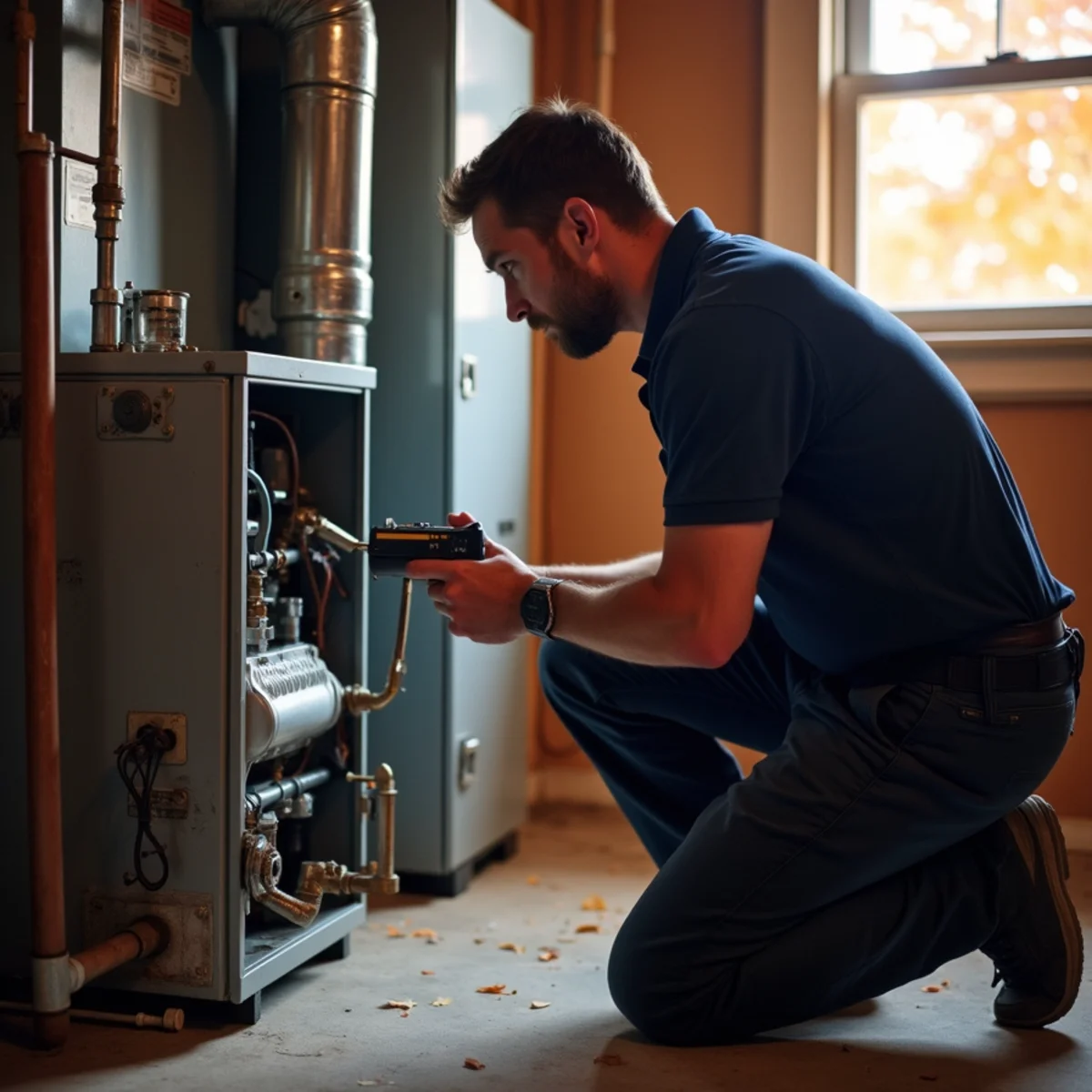
Most RTUs in the Dayton area heat with natural gas. Each fall we clean the flame sensor, inspect the igniter, verify the inducer and pressure switch, check the heat exchanger tubes for cracks or heavy rust, and run a combustion test. A rooftop heat exchanger sees rain, condensation and freeze-thaw cycles that a basement furnace never does, so corrosion shows up earlier.
A Practical PM Schedule for Ohio
| Season | Focus | Key tasks |
|---|---|---|
| Spring (March–April) | Cooling start-up | Coil cleaning, refrigerant check, economizer test, belts, filters |
| Summer (June–July) | Mid-season check | Filters, condensate drains, cottonwood debris on coils |
| Fall (September–October) | Heating start-up | Combustion and heat exchanger inspection, igniter, flame sensor, filters |
| Winter (December–January) | Mid-season check | Filters, economizer minimum position, snow clearance around unit |
Smaller buildings with one or two units often combine this into two full visits plus filter changes in between. Restaurants and buildings with heavy occupancy benefit from the full quarterly schedule.
Local Service From Down the Road
Our shop is in Miamisburg, a short drive from most business parks in Moraine and West Carrollton. Our light commercial HVAC technicians handle packaged RTUs of every brand, plus the split systems and chillers that often share a building with them. When a unit quits after closing time, call our 24-hour emergency HVAC repair number and a person, not a voicemail box, takes it from there.
If your rooftop units have not seen a technician in a while, call our office to set up a maintenance walk-through before the next heat wave or cold snap tests them.
Rooftop Unit Care Between Visits: Warning Signs, Weather and Replacement Planning
A maintenance contract covers a few hours on the roof each season. The rest of the year, the people who notice trouble first are office managers, store staff and tenants. This section is written for them: what to watch for from the floor, what Ohio weather does to rooftop equipment, how to report a problem so it gets fixed on the first trip, and how to plan a replacement before a unit forces the timing.
Warning signs building staff can spot without a ladder
- A zone that drifts away from setpoint during the afternoon while other zones hold, which often points to a single unit losing a compressor stage.
- Stale, stuffy air or odors in a space that used to feel fresh, a clue that the outside-air damper stopped moving.
- Water stains on ceiling tiles near a supply diffuser or directly under a unit, usually the drain or the curb seal rather than the roof itself.
- Squealing at fan start-up that fades after a minute, the classic sound of a slipping belt.
- Thermostats showing a heat or fan call with nothing happening, or a unit that runs all night when the building is empty.
- Utility bills climbing from one year to the next with no change in hours or occupancy.
Ohio weather events and what to check afterward
Southwest Ohio throws a full range of weather at rooftop equipment. After any of these events, a quick walk on the roof, or a call to have one of our technicians do it, can catch damage before the unit runs hard on it.
| Weather event | Risk to the unit | What to check |
|---|---|---|
| Hail storm | Flattened condenser fins, dented panels | Coil face, fan guards, cabinet seams |
| High winds or derecho | Loose panels, displaced hoods, debris in fans | Access doors, economizer hood, fan blades |
| Heavy snow | Blocked intake and flue openings, drifted condenser | Combustion air inlet, vent cap, clearance around unit |
| Ice storm | Iced fan blades, frozen drains | Fan rotation, condensate trap, disconnect handle |
| Cottonwood week in June | Matted coil face, high head pressure | Condenser coil, hail guards, outdoor air filters |
| Extended heat wave | Tripped high-pressure switch, weak capacitors | Alarms at the controls, compressor run status |
When a storm has clearly hurt equipment, our storm damage HVAC repair team documents what was damaged with photos and readings, which helps if the building owner files an insurance claim.
Reporting a problem so it gets fixed on the first trip
- Give the unit number or its location on the roof, and the area of the building it serves.
- Describe the symptom and when it started, including any pattern such as afternoons only or after a storm.
- Read the thermostat or building control screen: setpoint, actual temperature and whether it shows a call for cooling or heat.
- Note any breaker trips or alarm codes.
- Confirm who has the roof hatch key and whether a lift, ladder or escort is needed.
- Share the unit log so the technician can see what was replaced last and when.
Planning a replacement before the unit decides for you
Age alone is not the deciding factor. A well-kept rooftop unit can outlast a neglected newer one. The questions that matter are whether the heat exchanger is sound, whether the compressor and coils are healthy, how often it has failed recently, and whether parts and refrigerant are still easy to get.
Refrigerant is changing the math. Under the EPA’s Technology Transitions rule, new light commercial air conditioning and heat pump equipment built from 2025 onward uses lower-GWP refrigerants such as R-454B or R-32 in place of R-410A. Older R-410A units can still be serviced, and R-22 units are harder to keep going every year. When a large repair comes up on an aging unit, we price the fix and a replacement side by side, including whether the existing roof curb can stay or needs an adapter. Our HVAC system replacement team can walk you through the lift, curb and controls planning.
Leases, tenants and who owns the maintenance
In many net leases the tenant is responsible for routine HVAC upkeep while the landlord handles replacement, but every lease reads differently. Check yours, agree on who calls whom, and keep one shared set of records so a tenant turnover does not erase the unit history. For multi-site operators along the interstate, our guide to commercial HVAC maintenance along the I-75 corridor covers contract structure, and we serve office and retail buildings in Kettering and Moraine on the same schedule.
From our technicians
What our light commercial techs find on rooftops around Moraine
The most common RTU problem we find is an economizer that has not moved in years. The actuator failed, the linkage rusted, or someone wired the damper open to fix a stuffy-office complaint long ago. The building gets hotter and more humid every summer and the owner blames the compressor. Getting the damper working again, or at least set to a correct minimum position, often fixes comfort complaints nobody connected to it.
Second is the condensate drain. A packaged unit's trap dries out over winter or fills with algae in summer, and water ends up running across the roof membrane or dripping through the curb onto a ceiling tile. Tenants report a roof leak, a roofer gets called, and the real cause sits inside the unit.
Belts come third. We still find units running on the original belt, glazed and slipping, which cuts airflow long before it snaps. The honest tradeoff on older RTUs is money: once a 15- to 20-year-old unit needs a compressor or a heat exchanger, we lay out the repair next to a replacement curb adapter and new unit so the owner can decide with real numbers rather than a guess.
Want a technician to take a look?
Comfort Air Solutions serves Miamisburg, Dayton and the Miami Valley — 24/7 emergency service.
- 4.8★ · 32 Google reviews
- 25+ years’ experience
- Written options before work
- Factory-Authorized Bryant® Dealer