Quick answer
If your Springboro home was built in the 1990s or early 2000s and still has its original furnace and air conditioner, the system is at or past typical replacement age. Builder-grade 80% furnaces and older R-22 condensers are the usual suspects. Plan the replacement while it still runs so you can compare options without pressure.
Springboro’s big building boom left thousands of homes with builder-grade equipment installed at the same time. Much of it is now 20 to 30 years old, and the timing of replacement matters.
Short answer: Springboro’s subdivision homes built in the 1990s and 2000s are hitting the age when their original furnaces and air conditioners wear out. Many were builder-grade units, often 10–13 SEER air conditioners and 80% AFUE furnaces, and some older AC systems still use R-22 refrigerant, which is no longer produced. Planning a replacement before a breakdown gives you better options and fewer rushed decisions.
Why so many systems are aging at once
Springboro and the rest of Clearcreek Township grew quickly through the 1990s and 2000s as families moved south of Dayton along the I-75 corridor. Whole subdivisions were built within a few years of each other, and each house received equipment chosen by the builder, usually the most economical model that met code at the time.
That means entire streets reach the end of equipment life together. Mason and other Warren County communities that grew in the same period are seeing the same pattern.
It also means neighbors tend to call within the same few summers and winters. When a furnace on one street fails in January, several others of the same age and brand are usually close behind. Knowing that pattern gives you a head start: you can compare options now, while your own system still runs, instead of choosing under pressure with the house at 55 degrees.
What builder-grade really means
- Single-stage equipment that runs full blast or not at all, with little humidity control.
- 80% AFUE furnaces, where roughly a fifth of the fuel’s heat goes up the flue.
- Low-SEER air conditioners at 10 to 13 SEER, well below today’s SEER2 minimums.
- Minimal return ducts and a one-inch filter slot, often causing high static pressure.
- Sizing by rule of thumb rather than a room-by-room load calculation.
The R-22 question
Air conditioners and heat pumps installed before about 2010 typically use R-22. Under EPA rules, production and import of R-22 ended in 2020, so repairs now rely on recovered and reclaimed supply. If your older system has a refrigerant leak, recharging it is increasingly hard to justify, and there is no drop-in fix that makes an R-22 system perform like a new one.
Homes built after 2010 face a newer refrigerant change
Newer Springboro homes are not off the hook either, though their situation is gentler. Most systems installed from roughly 2010 onward use R-410A, which is still serviceable and widely available. Since the start of 2025, however, new split air conditioners and heat pumps have moved to lower-impact A2L refrigerants such as R-454B and R-32. That does not force anyone to replace a working R-410A unit, but it does mean a new outdoor unit generally needs a matching new indoor coil rather than a swap onto the old one.
Signs it is time to plan a replacement
| Sign | What it usually means |
|---|---|
| Rising repair frequency | Multiple components wearing out at once |
| Refrigerant leaks on an R-22 system | Costly recharges with limited supply |
| Rust or cracks found during inspection | Possible heat exchanger failure and safety risk |
| Upstairs bedrooms much hotter than downstairs | Undersized ducts or equipment that cannot keep up |
| Noisy blower or condenser | Worn motors and bearings |
| Higher utility bills with no change in use | Declining efficiency |
What a replacement should include
Swapping boxes is only part of the job. A good replacement in a two-story Springboro home addresses the problems the builder left behind.
- A fresh load calculation. Newer windows and extra attic insulation often mean a smaller system is the better fit.
- Duct and return review. Adding a return upstairs or enlarging the filter rack can fix the classic hot-bedroom complaint.
- Efficiency choices. A 95%-plus condensing furnace and a two-stage or variable-speed AC improve comfort and humidity control; a heat pump is another option worth discussing.
- Venting updates. Moving from an 80% furnace to a condensing model changes venting to PVC and adds a condensate drain.
- Combustion and safety testing on the new gas furnace to confirm it is burning cleanly.
- A maintenance plan from day one. Enrolling in our Fan Club plan keeps the new equipment tuned up each spring and fall so it reaches its full life.
Our HVAC system replacement process covers all of this and includes multiple price-point options, often quoted on the spot. If you want to compare heating equipment first, our furnace repair and installation page explains the furnace side, and our air conditioning installation page covers matched outdoor units.
Plan ahead instead of waiting for a breakdown
The worst time to replace a system is during the first heat wave or cold snap, when choices narrow and schedules fill. Comfort Air Solutions serves homeowners in Springboro and nearby Mason, with financing available. Call our office for a free replacement quote and an honest read on how much life your current system has left.
A replacement planner for original Springboro systems
ENERGY STAR suggests having a technician evaluate a heat pump or air conditioner once it passes about 10 years old, and a furnace or boiler once it passes about 15. Most original Springboro equipment is well beyond both marks, so the useful question is no longer whether to plan but how soon. The table below is how we sort the systems we find on subdivision calls.
| What the inspection shows | Our usual recommendation | Why |
|---|---|---|
| R-410A condenser holding its charge, clean coil, furnace under 15 years | Keep it, maintain it twice a year | Parts and refrigerant are readily available |
| Original 80% furnace with clean combustion readings and no rust at the burners | Budget now, replace on your schedule | It works, but its remaining life is short and efficiency is low |
| R-22 condenser that has needed refrigerant | Replace the cooling side within a season or two | Every recharge draws on a shrinking reclaimed supply |
| Furnace with a cracked heat exchanger or elevated CO in the flue | Replace before running it again | Carbon monoxide risk outweighs any repair |
| Mixed ages: a newer furnace paired with an original AC | Replace the outdoor unit and coil, keep the furnace if compatible | No reason to discard a sound, newer furnace |
| Blower motor, control board and inducer all failing within a few years | Replace the matched system | Repairs are now chasing a pattern of wear |
A twelve-month plan for a builder-original system
- Photograph both data plates and write down the model and serial numbers, refrigerant type and any past repair invoices you can find.
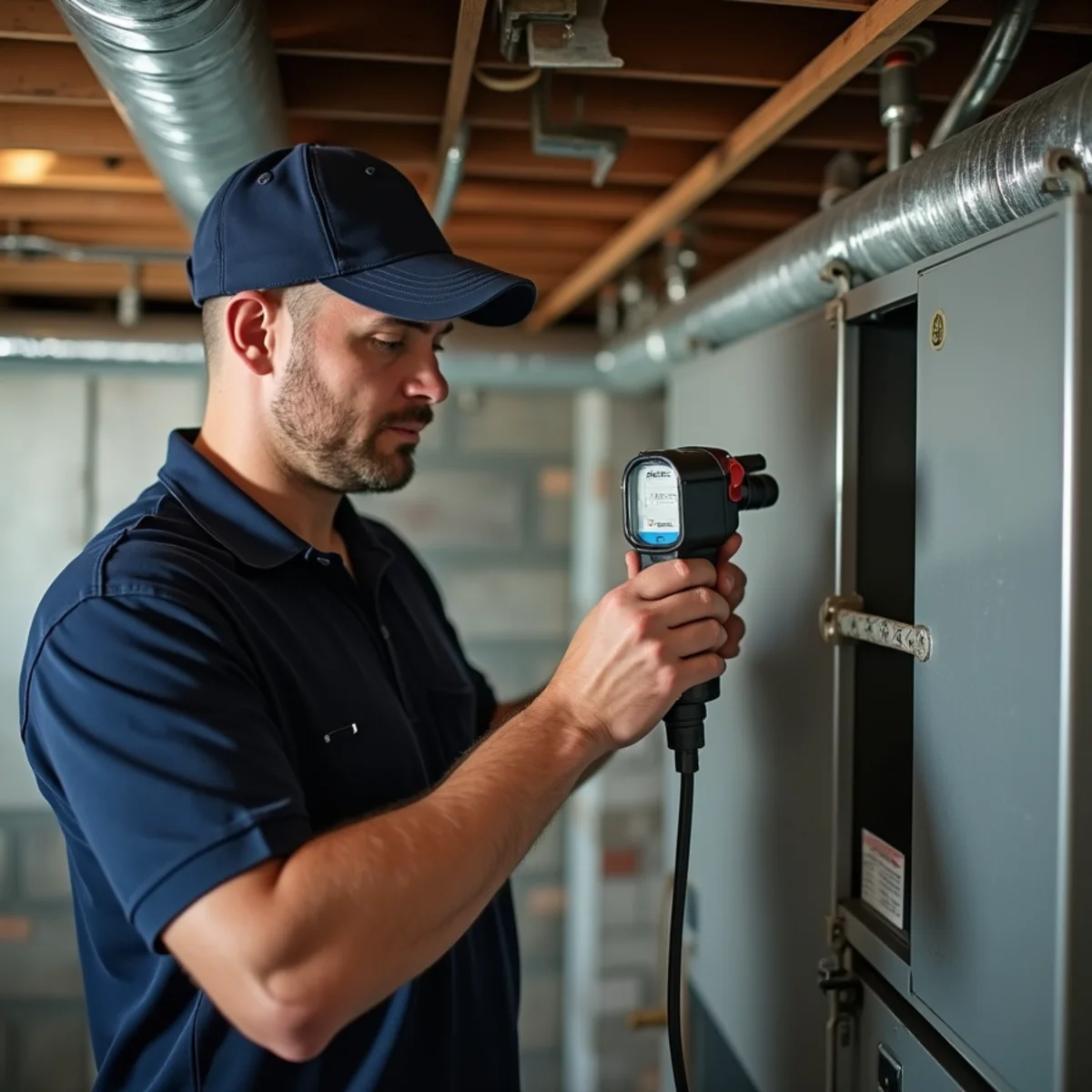
- Book a thorough inspection that includes combustion analysis, a static pressure reading and a refrigerant check, so the decision rests on measurements.
- Decide what you want fixed, not just replaced: the hot upstairs bedroom, a noisy return, dry winter air or a high gas bill.
- Collect written options in spring or fall, when installers have room in the schedule and your house is comfortable without the system running hard.
- Check covenants and paperwork. Review your HOA rules if the condenser location may change, and confirm the quote includes the permit and inspection.
- Set a trigger point. Agree with yourself on what event, such as a refrigerant leak or a failed heat exchanger test, moves the plan from someday to now.
How to compare replacement quotes fairly
- Was a room-by-room load calculation done, or was the old tonnage simply copied?
- Does the quote list the indoor coil, not just the furnace and outdoor unit, and is the combination a matched, rated system?
- Are return duct changes, a larger filter cabinet or a new thermostat included, or priced separately?
- How will the flue be handled if you move from an 80% furnace to a condensing model, and what happens to the water heater that shared it?
- Who pulls the permit, and is the old refrigerant recovered by an EPA 608-certified technician?
- Will the installer measure temperature split, static pressure and combustion values at startup and leave those numbers with you?
Incentives change from year to year, so ask about them but do not plan around them. The federal Energy Efficient Home Improvement Credit (Section 25C) ended for equipment placed in service after December 31, 2025, according to the IRS, so utility and manufacturer programs are the ones to check now. For a broader look at what drives the total on a new system, our guide to HVAC replacement cost factors around Dayton walks through each line item without guesswork.
What installation day looks like in a two-story subdivision home
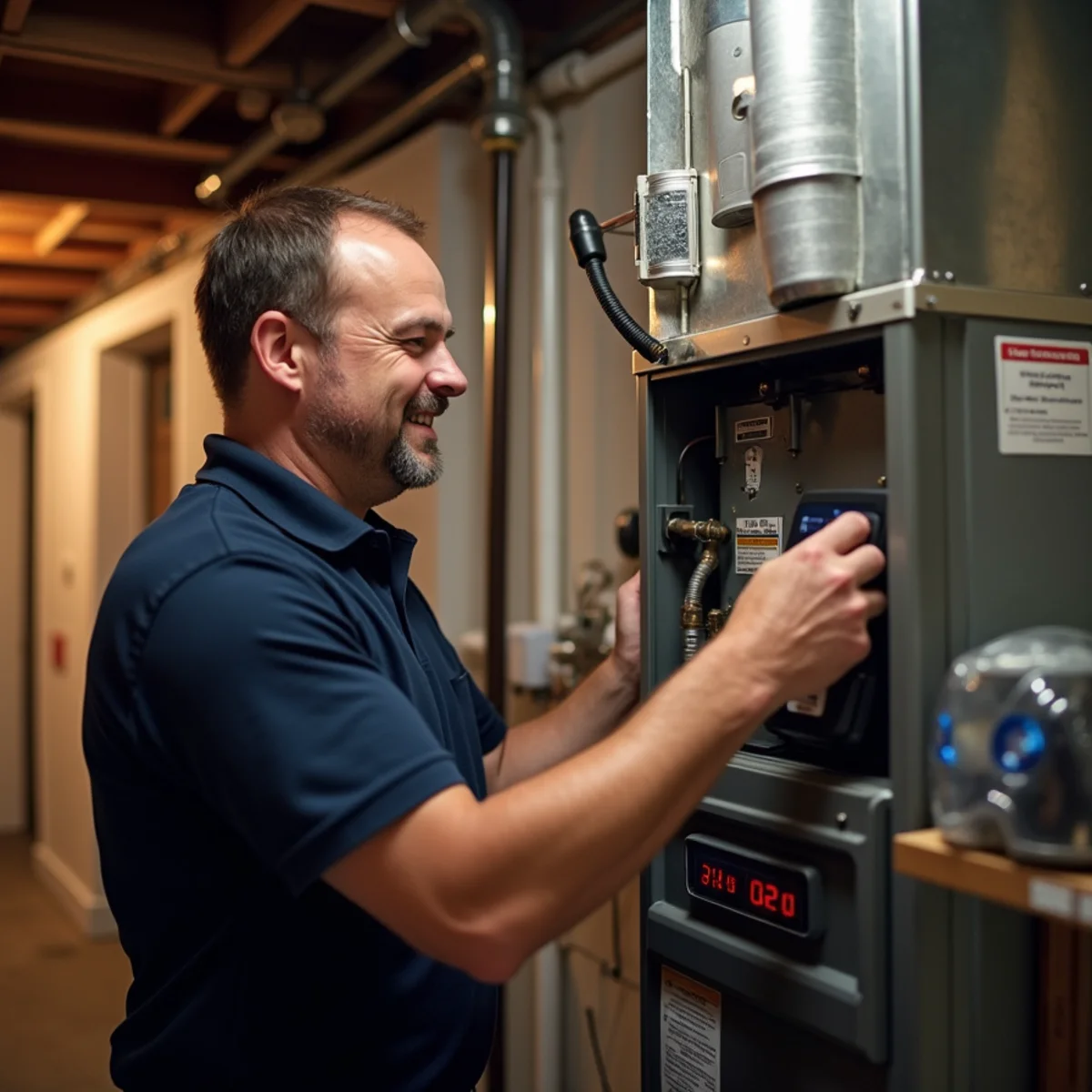
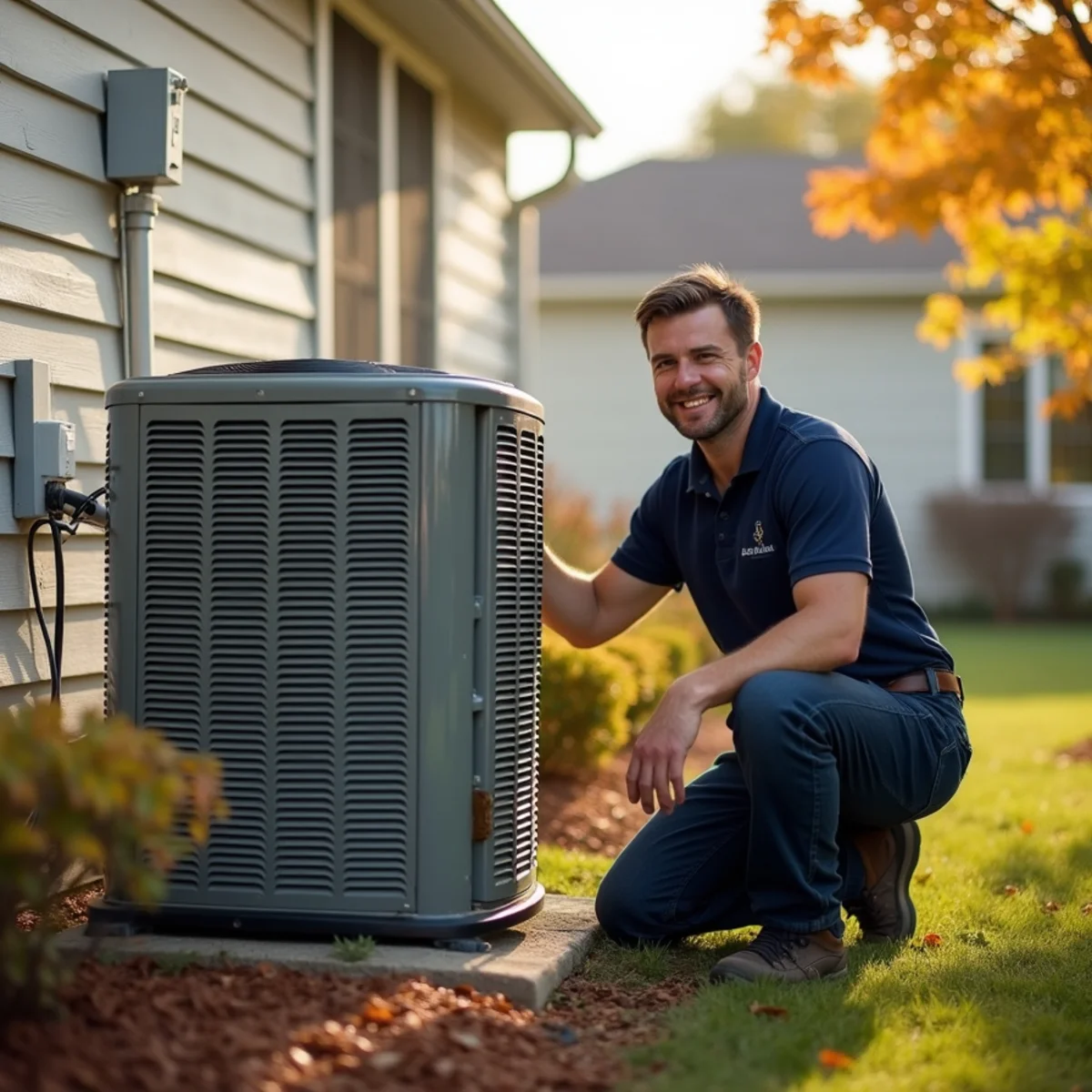
Most Springboro homes built in this era have the furnace in a basement or a first-floor utility closet and the condenser on a pad along the side yard, which keeps the job straightforward. Expect the crew to lay floor protection from the door to the equipment, shut off gas and power, recover the old refrigerant, and remove the old units. The new furnace, coil and outdoor unit go in, the line set is flushed or replaced, the system is pressure-tested and evacuated, and then the equipment is started and measured.
Before we leave, we walk you through the thermostat, show you where the filter goes and how often to change it, and point out the condensate drain if the new furnace is a condensing model. If you are still deciding between gas heat and an electric heat pump, it helps to read how we compare a heat pump against a gas furnace in Ohio before the quote visit. Homeowners just north of town can also see how we handle similar subdivisions in Centerville.
From our technicians
What we see when we open up original Springboro systems
On a first visit to a 1990s or early-2000s Springboro two-story, the furnace data plate usually tells the story before anything else. It is often an original 80% unit with a single-stage burner and a PSC blower motor, paired with a condenser that has faded, brittle fins and an R-22 label. Neither is necessarily failing, but both are running on borrowed time.
The detail homeowners rarely know about is the evaporator coil sitting on top of that furnace. Coils from that era often have formicary corrosion, tiny pinhole leaks that are hard to find and expensive to chase. When we see an R-22 system that has needed refrigerant twice in two summers, that coil is our first suspect.
The honest advice we give is not always to replace immediately. If the heat exchanger is sound, the combustion analysis looks clean and the AC holds its charge, we tell people to budget and plan. What we discourage is pouring major repair money into a matched pair that is twenty-plus years old.
Want a technician to take a look?
Comfort Air Solutions serves Miamisburg, Dayton and the Miami Valley — 24/7 emergency service.
- 4.8★ · 32 Google reviews
- 25+ years’ experience
- Written options before work
- Factory-Authorized Bryant® Dealer