Quick answer
The biggest indoor air quality issue in the Miami Valley is humidity swinging too high in summer and too low in winter. Keeping homes between 30 and 50 percent relative humidity, with a correctly sized AC or dehumidifier for muggy months and a whole-home humidifier for heating season, controls dust mites, mold, static and dry sinuses.
Southwest Ohio swings from sticky summers to dry winter air. Getting indoor humidity into the 30–50% range is one of the most effective things you can do for comfort and air quality.
Short answer: the healthiest range for indoor humidity is roughly 30–50% relative humidity. In the Miami Valley, summer pushes homes above that range and winter drags them below it. Controlling both ends, with proper AC operation or dehumidification in summer and a whole-home humidifier in winter, improves comfort, protects wood and cuts down on dust mites and mold.
Why humidity swings so much in Southwest Ohio
The Great Miami, Stillwater, Mad and Little Miami rivers all run through the region, and summer air here is often thick and muggy. Then winter arrives with cold, dry air that holds very little moisture. When that air is heated indoors, relative humidity can drop into the teens or low 20s.
| Season | Typical indoor issue | What you notice |
|---|---|---|
| Summer | Humidity above 50% | Clammy rooms, musty basement, condensation on ducts |
| Winter | Humidity well below 30% | Static shocks, dry skin and sinuses, gaps in hardwood |
| Spring and fall | Rapid swings | Windows fogging, sticky doors, allergy flare-ups |
Summer: controlling moisture
Your air conditioner removes moisture as it cools, but only when it runs long enough. An oversized unit cools the house quickly and shuts off before the coil has a chance to pull water out of the air. The result is a house that reads 72 degrees on the thermostat and still feels damp.
Leaky return ducts make it worse. A return joint that pulls air from a humid crawlspace or a hot attic keeps feeding moisture straight into the system. Sealing those joints and confirming the refrigerant charge are two of the first things we check when a homeowner says the house feels sticky even though the AC seems to be working.
Practical steps
- Set the blower to “auto,” not “on,” so moisture on the coil drains away instead of being blown back into the house.
- Ask about a slower cooling fan speed or a variable-speed system that runs longer, gentler cycles.
- Run bath fans during showers and use a kitchen hood that vents outdoors.
- Consider a whole-home dehumidifier tied into the ductwork if your house stays above 50% even with the AC working correctly.
Basements deserve special attention
Many Montgomery County and Greene County homes have poured or block basements that stay cool and damp all summer. That moisture feeds musty odors and mold on stored boxes. Grading and gutters come first, then a properly sized dehumidifier with a floor drain or condensate pump so it does not depend on someone emptying a bucket.
Winter: adding moisture the right way
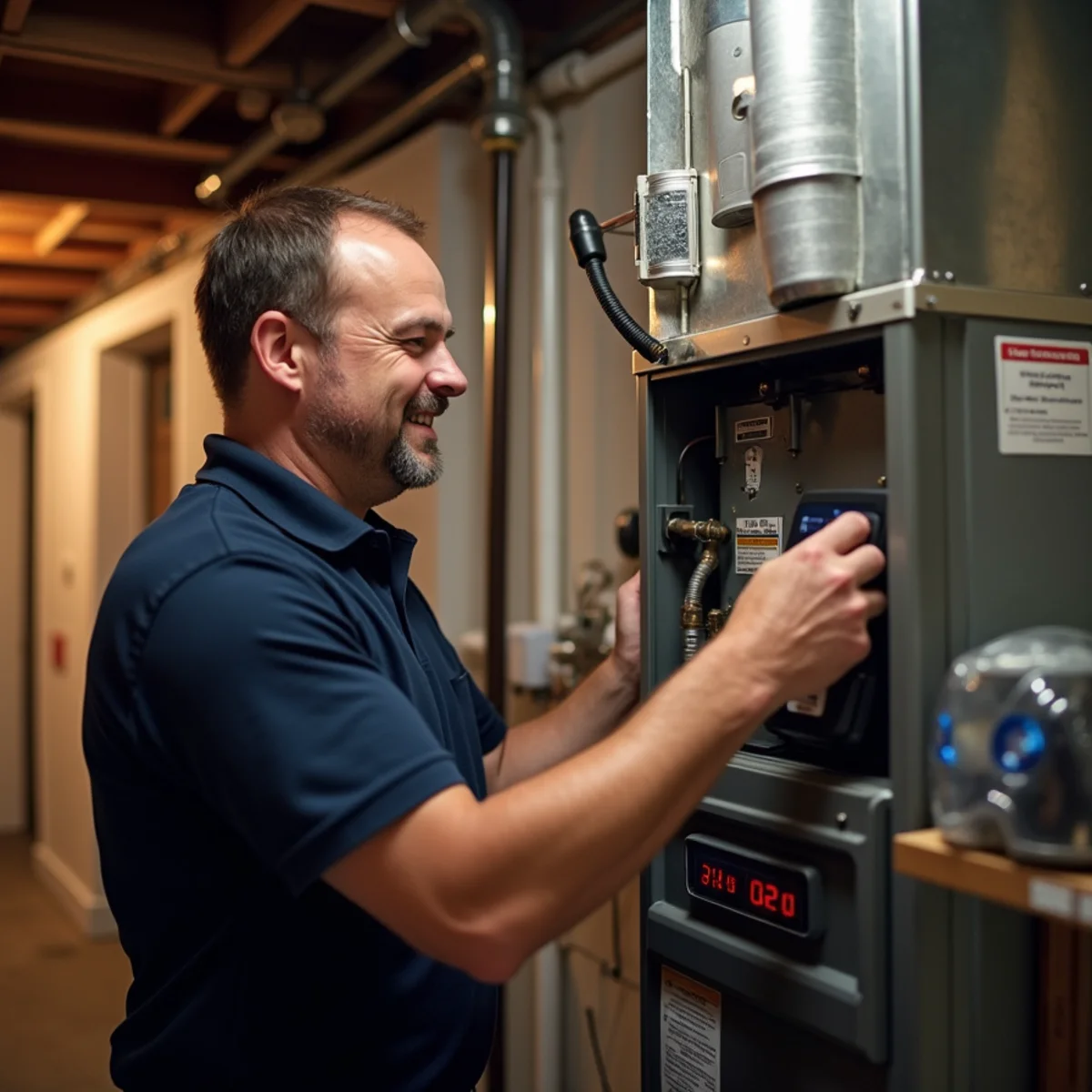
A whole-home humidifier mounts on the furnace and adds water vapor to heated air as it moves through the ducts. Bypass and fan-powered models use a water panel; steam humidifiers generate their own vapor and work even when the furnace is not heating. Any of them beats a collection of tabletop units that need constant refilling and cleaning.
Dust mites, mold and other air quality concerns
Dust mites thrive in humid air and struggle when humidity stays below 50%. Mold needs moisture too. Keeping humidity in range does more for allergy sufferers than almost any single gadget, and pairing it with better filtration adds another layer.
Newer, tighter homes add a twist. Subdivisions built in the last two decades trap cooking odors, moisture and household chemicals more than drafty older houses do. Fresh-air ventilation, done in a controlled way, is sometimes part of the answer alongside humidity control.
- Upgrade filtration. A deeper media filter captures finer particles with less airflow restriction than a thin pleated filter.
- Consider UV purification. A UV light at the coil helps keep it clean and limits microbial growth where condensation collects.
- Clean ducts when needed. Visible debris, remodeling dust or pest activity justify an air duct cleaning visit.
- Keep equipment maintained. Annual preventative maintenance includes flushing condensate lines and checking humidifier panels.
- Install low-level CO detectors. Any home with gas appliances benefits from a detector that reports low concentrations, not just alarm-level readings.
Pollen season and air quality alert days
Humidity is only half of the Miami Valley story. Maple, oak and elm pollen can show up on car windshields in late winter, grasses follow in late spring, and ragweed carries into September. On hot, still summer afternoons the region also sees ground-level ozone build up, and the regional planning commission issues air quality alerts through its Miami Valley Air program.
- On high-pollen or alert days, keep windows shut and let the air conditioner recirculate and filter indoor air.
- Change or check the filter right after the heaviest spring pollen weeks, since that is when it loads fastest.
- Seal gaps around window units and attic hatches, which let unfiltered outdoor air bypass the system.
- Test the basement for radon separately. It is a soil gas, and no humidifier, filter or duct cleaning will reveal it.
Getting your home into the right range
A basic hygrometer is the easiest place to start; track readings for a week in each season. If the numbers stay out of range, our indoor air quality services include humidifiers, dehumidification, filtration and UV purifiers. We serve homes across Montgomery County and nearby communities like Bellbrook. Call our office and we will measure your home’s humidity and recommend what fits.
Beyond humidity: a full indoor air quality plan for Miami Valley homes
The U.S. Environmental Protection Agency describes three basic strategies for cleaner indoor air, in this order: control the sources, ventilate, then clean the air. The order matters. A premium filter cannot keep up with a gas range that vents nowhere or a basement that is wet every July. The table below shows how each strategy plays out in a typical Dayton-area house.
| Strategy | What it looks like here | Problems it solves | HVAC role |
|---|---|---|---|
| Source control | Fixing gutters and grading, sealing crawlspace vapor barriers, storing paints and fuel in a detached garage, venting the dryer outdoors | Musty basements, chemical odors, mold on stored items | Sealing return ducts so they stop drawing from dirty spaces |
| Ventilation | Kitchen hoods ducted outdoors, bath fans on timers, an ERV in a tight newer home | Stale air, lingering cooking smells, winter window condensation | Balanced fresh-air equipment tied into the ductwork |
| Air cleaning | Deep media filters, UV at the coil, portable HEPA units in bedrooms | Pollen, pet dander, fine dust | Filter cabinets sized so the blower is not starved |
Warning signs worth taking seriously
- Headaches, nausea or drowsiness that ease when you leave the house. Treat that as a possible carbon monoxide problem first: get everyone outside and call 911 or your gas utility before anything else.
- Dust returning to shelves within a day or two of cleaning.
- A musty or damp smell that returns every summer.
- Allergy symptoms that are worse indoors than out.
- Black or gray streaks around supply registers, which often point to leaky ducts or candle and fireplace soot.
- Odors from paint, new flooring or new furniture that linger for weeks.
That last one is common after remodels. The EPA notes that concentrations of many volatile organic compounds are consistently higher indoors than outdoors, up to ten times higher, and that bringing in outdoor air is the main way to lower VOCs from indoor sources. Run exhaust fans and open windows while painting or refinishing floors, and for several days afterward when the weather allows.
What a technician checks on an air quality visit
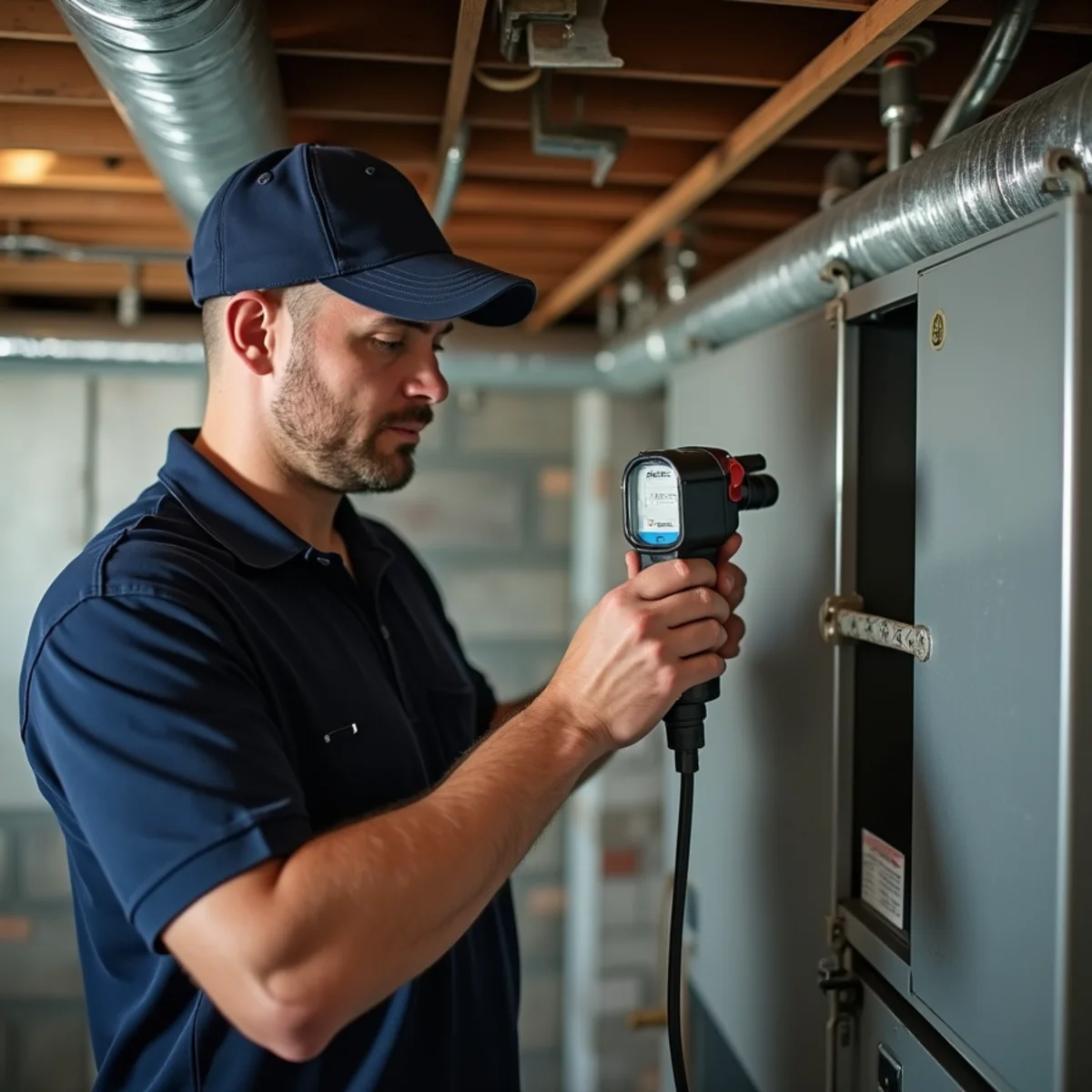
- Humidity at the return and supply, plus the temperature split across the coil, to see whether the AC is actually removing moisture.
- Filter fit and bypass. A gap around the filter lets dust skip it entirely, no matter its rating.
- Static pressure before recommending a thicker or higher-MERV filter, so a cleaner filter does not choke the blower.
- Drain pan and condensate line, where standing water and slime feed odors.
- Return duct joints in basements, crawlspaces and attics that pull in dusty or damp air.
- Combustion safety on gas appliances, using a combustion analyzer on the furnace and ambient CO readings in living spaces.
That last check connects to our carbon monoxide safety testing, and it is the one item on this list we would never skip in a home with gas heat.
Radon: the air quality problem your HVAC cannot see
Radon seeps up from soil and is found in homes across Ohio. The EPA recommends fixing a home when radon tests at or above 4 picocuries per liter. Short-term kits are available at hardware stores, and the test belongs on the lowest level you use regularly. If a result comes back high, a certified radon mitigation contractor installs a sub-slab fan system. It is separate work from ours, but we are glad to look at how a new mitigation system and a finished basement’s return ducts interact.
Matching the fix to the house
A 1950s ranch with leaky ducts in a damp basement needs sealing and dehumidification long before it needs an air purifier. A two-story built in the 2010s in Springboro or Beavercreek is often the opposite: tight enough that ventilation becomes the priority. Duct cleaning helps in specific situations, and our honest take on whether duct cleaning is worth it explains when. Homeowners in Kettering and Centerville often start with a humidity reading and a filter check during a routine visit, which is a sensible first step anywhere in the valley.
From our technicians
What our technicians find when a house feels muggy or dry
When someone calls about a sticky house in July, we usually find one of three things. The thermostat fan is set to on, so water on the coil gets blown right back into the ductwork. The air conditioner is oversized and runs in short bursts. Or the condensate line is partly clogged and water is sitting in the drain pan, evaporating back into the airstream. A hygrometer reading at the return and a look at the drain pan tell us a lot in the first ten minutes.
Winter calls are the reverse. We find humidifiers with a water panel so crusted with minerals that no water gets through, a saddle valve that was turned off years ago, or a bypass damper left in the summer position. Southwest Ohio well and city water is hard, so panels scale quickly.
The honest tradeoff: a whole-home dehumidifier is not always the first answer. Fixing an oversized system, sealing return leaks or lowering the cooling fan speed often gets a house into range without adding another appliance.
Want a technician to take a look?
Comfort Air Solutions serves Miamisburg, Dayton and the Miami Valley — 24/7 emergency service.
- 4.8★ · 32 Google reviews
- 25+ years’ experience
- Written options before work
- Factory-Authorized Bryant® Dealer